Google Accused of Secret Program Giving Them an Unfair Advantage in Ad-Buying Slashdotby EditorDavid on google at January 1, 1970, 1:00 am (cached at April 11, 2021, 11:56 pm)

Google "has utilized a secret program to track bids on its ad-buying platform," writes the New York Post, "and has been accused of using the information to gain an unfair market advantage that raked in hundreds of millions of dollars annually, according to a report." The initiative — dubbed "Project Bernanke" in an apparent reference to former Federal Reserve chairman Ben Bernanke — was detailed in court filings in an ongoing Texas-led antitrust suit, which were initially uploaded to an online docket with incomplete redactions, The Wall Street Journal reported Saturday... Lawyers for the Lone Star State argue, however, that the program was tantamount to insider trading, particularly when combined with Google's complicated, multi-layered role in the online advertising marketplace. The company operates simultaneously as the operator of a major ad exchange, a representative of both buyers and sellers on the exchange — and a buyer in its own right, according to the suit. By using Project Bernanke's inside information on what other ad buyers were willing to pay for space, Google could tailor its operations to beat out rivals and bid the bare minimum to secure ad inventory, the state reportedly alleges... Separately, the filings reveal more details about Jedi Blue — an alleged hush-hush deal in which Google allegedly guaranteed that Facebook would win a fixed percentage of advertising deals in which the social media giant bid... Google also admitted that the deal required Facebook to spend $500 million or more in Google's Ad Manager or AdMob bids in the pact's fourth year, and that Facebook agreed to make efforts to win 10 percent of the auctions in which it competed, the WSJ said. The arrangement appeared "to allow Facebook to bid and win more often in auctions," lawyers for Texas alleged in their filings.

Read more of this story at Slashdot.
US Prosecutor Urges Crack Down on 'the Scourge of Online Scams' Slashdotby EditorDavid on crime at January 1, 1970, 1:00 am (cached at April 11, 2021, 10:52 pm)

Last month America's Federal Bureau of Investigation released its annual report on internet crime, which a former federal prosecutor bemoans as "another record year." The bureau received 791,790 complaints of "internet-enabled crime" in 2020 (a 69 percent increase over the prior year), representing over $4.1 billion in reported losses (a 20 percent increase). These complaints included a wide array of crimes, such as phishing, spoofing, extortion, data breaches, and identity theft. Collectively, they represent further evidence of the Justice Department's long-running failure to effectively pursue internet fraud. Since the start of the pandemic, the scope and frequency of this criminal activity has become noticeably worse. Online fraudsters have stolen government relief checks, sold fake test kits and vaccines, and exploited the altruistic impulses of the American public through fake charities. But the broader failure has wreaked incalculable harm on the American public for years, including those in our most vulnerable and less tech-savvy populations, like senior citizens. The FBI's most recent report makes it clear that the government needs to dramatically step up and rethink its approach to combating internet-based fraud — including how it tracks this problem, as well as how it can punish and deter these crimes more effectively going forward... One major reason that internet fraud remains such a persistent and vexing problem is that the Justice Department has never made it a real priority — in part because these kinds of cases are not particularly attractive to prosecutors. Victim losses on an individual basis tend to be relatively small and widely dispersed. A substantial amount of this crime also originates abroad, and it can be hard and bureaucratically cumbersome to obtain evidence from foreign governments — particularly from countries where these scams comprise a large, de facto industry that employs many people. It is also far more challenging to find and secure cooperating insider witnesses when the perpetrators are beyond our borders. And even under the best of circumstances, the large body of documentary evidence that fraud cases involve can be exceedingly difficult to gather and review. If you manage to overcome all of those obstacles, you may still end up having to deal with years of extradition-related litigation before anyone ever sees the inside of a courtroom. Making matters worse, much of the press does not treat these cases as particularly newsworthy — itself a symptom of how routine internet fraud has become — and prosecutors like being in the press... [T]ime is not on our side. This is a problem that will continue to metastasize — including in new and unpredictable ways — unless and until the federal government dramatically steps up its enforcement efforts.

Read more of this story at Slashdot.

US Prosecutor Urges Crack Down on 'the Scourge of Online Scams' Slashdotby EditorDavid on crime at January 1, 1970, 1:00 am (cached at April 11, 2021, 10:51 pm)

Last month America's Federal Bureau of Investigation released its annual report on internet crime, which a former federal prosecutor bemoans as "another record year." The bureau received 791,790 complaints of "internet-enabled crime" in 2020 (a 69 percent increase over the prior year), representing over $4.1 billion in reported losses (a 20 percent increase). These complaints included a wide array of crimes, such as phishing, spoofing, extortion, data breaches, and identity theft. Collectively, they represent further evidence of the Justice Department's long-running failure to effectively pursue internet fraud. Since the start of the pandemic, the scope and frequency of this criminal activity has become noticeably worse. Online fraudsters have stolen government relief checks, sold fake test kits and vaccines, and exploited the altruistic impulses of the American public through fake charities. But the broader failure has wreaked incalculable harm on the American public for years, including those in our most vulnerable and less tech-savvy populations, like senior citizens. The FBI's most recent report makes it clear that the government needs to dramatically step up and rethink its approach to combating internet-based fraud — including how it tracks this problem, as well as how it can punish and deter these crimes more effectively going forward... One major reason that internet fraud remains such a persistent and vexing problem is that the Justice Department has never made it a real priority — in part because these kinds of cases are not particularly attractive to prosecutors. Victim losses on an individual basis tend to be relatively small and widely dispersed. A substantial amount of this crime also originates abroad, and it can be hard and bureaucratically cumbersome to obtain evidence from foreign governments — particularly from countries where these scams comprise a large, de facto industry that employs many people. It is also far more challenging to find and secure cooperating insider witnesses when the perpetrators are beyond our borders. And even under the best of circumstances, the large body of documentary evidence that fraud cases involve can be exceedingly difficult to gather and review. If you manage to overcome all of those obstacles, you may still end up having to deal with years of extradition-related litigation before anyone ever sees the inside of a courtroom. Making matters worse, much of the press does not treat these cases as particularly newsworthy — itself a symptom of how routine internet fraud has become — and prosecutors like being in the press... [T]ime is not on our side. This is a problem that will continue to metastasize — including in new and unpredictable ways — unless and until the federal government dramatically steps up its enforcement efforts.

Read more of this story at Slashdot.

How a Researcher 'Clinging To the Fringes of Academia' Helped Develop a Covid-19 Vac Slashdotby EditorDavid on biotech at January 1, 1970, 1:00 am (cached at April 11, 2021, 9:57 pm)

Long-time Slashdot reader destinyland writes: The New York Times tells the story of Hungarian-born Dr. Kariko, whose father was a butcher and who growing up had never met a scientist — but knew they wanted to be one. Despite earning a Ph.D. at Hungary's University of Szeged and working as a postdoctoral fellow at its Biological Research Center, Kariko never found a permanent position after moving to the U.S., "instead clinging to the fringes of academia." Now 66 years old, Dr. Kariko is suddenly being hailed as "one of the heroes of Covid-19 vaccine development," after spending an entire career focused on mRNA, "convinced mRNA could be used to instruct cells to make their own medicines, including vaccines." From the article: For many years her career at the University of Pennsylvania was fragile. She migrated from lab to lab, relying on one senior scientist after another to take her in. She never made more than $60,000 a year... She needed grants to pursue ideas that seemed wild and fanciful. She did not get them, even as more mundane research was rewarded. "When your idea is against the conventional wisdom that makes sense to the star chamber, it is very hard to break out," said Dr. David Langer, a neurosurgeon who has worked with Dr. Kariko... Kariko's husband, Bela Francia, manager of an apartment complex, once calculated that her endless workdays meant she was earning about a dollar an hour. The Times also describes a formative experience in 1989 with cardiologist Elliot Barnathan: One fateful day, the two scientists hovered over a dot-matrix printer in a narrow room at the end of a long hall. A gamma counter, needed to track the radioactive molecule, was attached to a printer. It began to spew data. Their detector had found new proteins produced by cells that were never supposed to make them — suggesting that mRNA could be used to direct any cell to make any protein, at will. "I felt like a god," Dr. Kariko recalled. Yet Kariko was eventually left without a lab or funds for research, until a chance meeting at a photocopying machine led to a partnership with Dr. Drew Weissman of the University of Pennsylvania: "We both started writing grants," Dr. Weissman said. "We didn't get most of them. People were not interested in mRNA. The people who reviewed the grants said mRNA will not be a good therapeutic, so don't bother.'" Leading scientific journals rejected their work. When the research finally was published, in Immunity, it got little attention... "We talked to pharmaceutical companies and venture capitalists. No one cared," Dr. Weissman said. "We were screaming a lot, but no one would listen." Eventually, though, two biotech companies took notice of the work: Moderna, in the United States, and BioNTech, in Germany. Pfizer partnered with BioNTech, and the two now help fund Dr. Weissman's lab.

Read more of this story at Slashdot.

Iran Nuclear Facility Suffers Blackout, Cyberattack Suspected Slashdotby EditorDavid on military at January 1, 1970, 1:00 am (cached at April 11, 2021, 8:42 pm)

While difficult negotiations continue over a deal to curtail Iran's nuclear ambitions, this morning Iran suddenly experienced a blackout at its underground Natanz atomic facility, the Associated Press reports: While there was no immediate claim of responsibility, suspicion fell immediately on Israel, where its media nearly uniformly reported a devastating cyberattack orchestrated by the country caused the blackout. Israeli Prime Minister Benjamin Netanyahu later Sunday night toasted his security chiefs, with the head of the Mossad, Yossi Cohen, at his side on the eve of his country's Independence Day... Netanyahu, who also met Sunday with U.S. Defense Secretary Lloyd Austin, has vowed to do everything in his power to stop the nuclear deal... Natanz has been targeted by sabotage in the past. The Stuxnet computer virus, discovered in 2010 and widely believed to be a joint U.S.-Israeli creation, once disrupted and destroyed Iranian centrifuges at Natanz amid an earlier period of Western fears about Tehran's program. Natanz suffered a mysterious explosion at its advanced centrifuge assembly plant in July that authorities later described as sabotage. Iran now is rebuilding that facility deep inside a nearby mountain. Iran also blamed Israel for the November killing of a scientist who began the country's military nuclear program decades earlier. Multiple Israeli media outlets reported Sunday that an Israeli cyberattack caused the blackout in Natanz. Public broadcaster Kan said the Mossad was behind the attack. Channel 12 TV cited "experts" as estimating the attack shut down entire sections of the facility. While the reports offered no sourcing for their information, Israeli media maintains a close relationship with the country's military and intelligence agencies... On Tuesday, an Iranian cargo ship said to serve as a floating base for Iran's paramilitary Revolutionary Guard forces off the coast of Yemen was struck by an explosion, likely from a limpet mine. Iran has blamed Israel for the blast. That attack escalated a long-running shadow war in Mideast waterways targeting shipping in the region.

Read more of this story at Slashdot.

Iran Nuclear Facility Suffers Blackout, Cyberattack Suspected Slashdotby EditorDavid on military at January 1, 1970, 1:00 am (cached at April 11, 2021, 8:42 pm)

While difficult negotiations continue over a deal to curtail Iran's nuclear ambitions, this morning Iran suddenly experienced a blackout at its underground Natanz atomic facility, the Associated Press reports: While there was no immediate claim of responsibility, suspicion fell immediately on Israel, where its media nearly uniformly reported a devastating cyberattack orchestrated by the country caused the blackout. Israeli Prime Minister Benjamin Netanyahu later Sunday night toasted his security chiefs, with the head of the Mossad, Yossi Cohen, at his side on the eve of his country's Independence Day... Netanyahu, who also met Sunday with U.S. Defense Secretary Lloyd Austin, has vowed to do everything in his power to stop the nuclear deal... Natanz has been targeted by sabotage in the past. The Stuxnet computer virus, discovered in 2010 and widely believed to be a joint U.S.-Israeli creation, once disrupted and destroyed Iranian centrifuges at Natanz amid an earlier period of Western fears about Tehran's program. Natanz suffered a mysterious explosion at its advanced centrifuge assembly plant in July that authorities later described as sabotage. Iran now is rebuilding that facility deep inside a nearby mountain. Iran also blamed Israel for the November killing of a scientist who began the country's military nuclear program decades earlier. Multiple Israeli media outlets reported Sunday that an Israeli cyberattack caused the blackout in Natanz. Public broadcaster Kan said the Mossad was behind the attack. Channel 12 TV cited "experts" as estimating the attack shut down entire sections of the facility. While the reports offered no sourcing for their information, Israeli media maintains a close relationship with the country's military and intelligence agencies... On Tuesday, an Iranian cargo ship said to serve as a floating base for Iran's paramilitary Revolutionary Guard forces off the coast of Yemen was struck by an explosion, likely from a limpet mine. Iran has blamed Israel for the blast. That attack escalated a long-running shadow war in Mideast waterways targeting shipping in the region.

Read more of this story at Slashdot.

How Union Organizers Will Continue Their Fight With Amazon Slashdotby EditorDavid on business at January 1, 1970, 1:00 am (cached at April 11, 2021, 7:37 pm)

"The lopsided vote against a union at Amazon's warehouse in Bessemer, Alabama, was a major disappointment to organized labor..." writes the New York Times. "Yet the defeat doesn't mark the end of the campaign against Amazon so much as a shift in strategy." The article notes unions and other labor groups enjoyed more success when opposing Amazon's plans for a New York headquarters by joining with local politicians and nonprofit organizations: In interviews, labor leaders said they would step up their informal efforts to highlight and resist the company's business and labor practices rather than seek elections at individual job sites, as in Bessemer. The approach includes everything from walkouts and protests to public relations campaigns that draw attention to Amazon's leverage over its customers and competitors... The strategy reflects a paradox of the labor movement: While the Gallup Poll has found that roughly two-thirds of Americans approve of unions — up from half in 2009, a low point — it has rarely been more difficult to unionize a large company. One reason is that labor law gives employers sizable advantages. The law typically forces workers to win elections at individual work sites of a company like Amazon, which would mean hundreds of separate campaigns. It allows employers to campaign aggressively against unions and does little to punish employers that threaten or retaliate against workers who try to organize. Lawyers representing management say that union membership has declined — from about one-third of private-sector workers in the 1950s to just over 6 percent today — because employers have gotten better at addressing workers' needs... But labor leaders say wealthy, powerful companies have grown much bolder in pressing the advantages that labor law affords them.... [E]ven as elections have often proven futile, labor has enjoyed some success over the years with an alternative model — what Dr. Ruth Milkman, a sociologist of labor at the Graduate Center of the City University of New York, called the "air war plus ground war." The idea is to combine workplace actions like walkouts (the ground war) with pressure on company executives through public relations campaigns that highlight labor conditions and enlist the support of public figures (the air war). The Service Employees International Union used the strategy to organize janitors beginning in the 1980s, and to win gains for fast-food workers in the past few years, including wage increases across the industry. "There are almost never any elections," Dr. Milkman said. "It's all about putting pressure on decision makers at the top...." Many labor officials urged Congress to increase its scrutiny of Amazon's labor practices, including its use of mandatory meetings, texts and signs to discourage workers in Alabama from unionizing...But after Bessemer, many labor leaders think Congress should go further, letting workers unionize companywide or industrywide, not just by work site as is typical... Mary Kay Henry, president of the Service Employees International Union, agreed that the key to taking on a company as powerful as Amazon was to make it easier for workers to unionize across a company or industry. "It's not going to happen one warehouse at a time," she said. But Ms. Henry said workers and politicians could pressure Amazon to come to the bargaining table long before the law formally requires it.

Read more of this story at Slashdot.

Astronomers Detect a Bright-Blue Bridge of Stars, and It's About To Blow Slashdotby EditorDavid on space at January 1, 1970, 1:00 am (cached at April 11, 2021, 6:37 pm)

"Astrophysicists have found a new region of the Milky Way, and it's filled with searingly hot, bright-blue stars that are about to explode," writes Live Science (in a report shared by long-time Slashdot reader fahrbot-bot): The researchers were creating the most detailed map yet of the star-flecked spiral arms of our galactic neighborhood with the European Space Agency's (ESA) Gaia telescope when they discovered the region, which they have named the Cepheus spur, they reported in a new study. Nestled between the Orion Arm — where our solar system is — and the constellation Perseus, the spur is a belt between two spiral arms filled with enormous stars three times the size of the sun and colored blue by their blistering heat. Astronomers call these giant, blue stars OB stars due to the predominantly blue wavelengths of light that they emit. They are the rarest, hottest, shortest-living and largest stars in the entire galaxy. The violent nuclear reactions taking place inside their hearts make them six times hotter than the sun. And the enormous stellar explosions that end their lives — called supernovas — scatter the heavy elements essential for complex life far into the galaxy. "OB stars are rare, in a Galaxy of 400 billion stars there might be less than 200,000," study co-author Michelangelo Pantaleoni González, a researcher at the Spanish Astrobiology Center (CAB), told Live Science.

Read more of this story at Slashdot.

Git.PHP.net Not Compromised in Supply Chain Attack, but User Database Leak Possible Slashdotby EditorDavid on php at January 1, 1970, 1:00 am (cached at April 11, 2021, 5:49 pm)

Inside.com's developer newsletter reports: The PHP team no longer believes the git.php.net server was compromised in a recent attack, which prompted PHP to move servers to GitHub and caused the team to temporarily put releases on hold until mid-April... In an update offering further insight into the root cause of the late March attack, the team says because it's possible the master.php.net user database was exposed, master.php.net has been moved to main.php.net. The team also reset php.net passwords, and you can visit https://main.php.net/forgot.php to set a new password. In addition, git.php.net and svn.php.net are both read-only now. Two malicious commits were pushed to the php-src repo from PHP founder Rasmus Lerdorf and PHP core developer Nikita Popov, Popov announced March 28. After an investigation, the PHP team reassured users these malicious commits never reached end-users. However, the team decided to move to GitHub after determining maintaining its own git infrastructure is "an unnecessary security risk." "In 2019, the PHP team temporarily shut down its Git server after discovering that an attacker had maliciously replaced the official PHP Extension and Application Repository with a malicious one," reports CPO magazine. But this newer supply chain attack "targeted any server that uses PHP ZLib compression when sending data. Most servers use this functionality on almost all content except images and archives that are already size optimized." The supply chain attack would have turned PHP into a remote web shell through which the attackers could execute any command without authentication. This is because the malicious attackers would have the same privileges as the web server running PHP. The backdoor is triggered at the start of a request by checking if the request contains the word "zerodium." If this condition was met, PHP executes the code in the "User-Agentt" request header. The header closely resembles the PHP "User-Agent" request for checking for browser properties. The rest of the request would thus be treated as a command that could be executed on a PHP server using the server's privileges. This would allow the hackers to run any arbitrary command without the need for further privileges... PHP powers 80% of all websites. Thus, a successful supply chain attack exploiting the language could prove catastrophic.

Read more of this story at Slashdot.

[no title] Scripting News(cached at April 11, 2021, 5:47 pm)

I know this is just math, but 1980 is to 1940 as 2020 is to 1980.
[no title] Scripting News(cached at April 11, 2021, 5:03 pm)

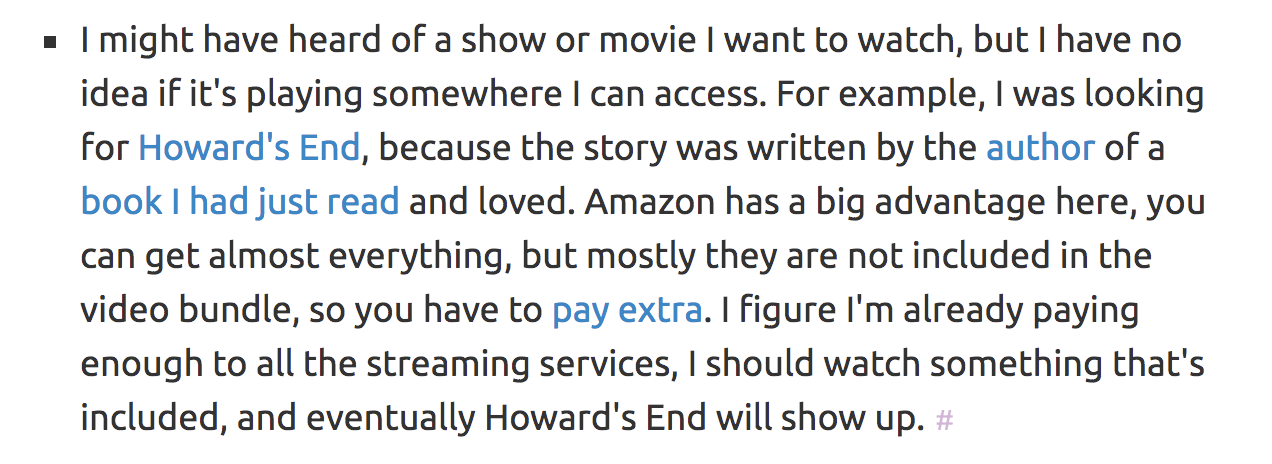
Embarrassing mistake. Yesterday, in a longish piece about bingewatching, I gave Kazuo Ishiguro credit for writing the novel Howard’s End. He actually wrote Remains of the Day. There is a connection. Both were made into movies starring Anthony Hopkins. I corrected the piece, but here's a screen shot of the error. BTW, interestingly, I received an email from Netflix last night suggesting I watch Howard's End. Is it a coincidence, or does their algorithm read my blog? That would be amazing if it did. (I'm sure it doesn't but it's an incredible source about my interests.)
NASA's Mars Helicopter Flight Postponed to No Earlier than This Wednesday Slashdotby EditorDavid on mars at January 1, 1970, 1:00 am (cached at April 11, 2021, 4:35 pm)

An anonymous reader shares this announcement from NASA: Based on data from the Ingenuity Mars helicopter that arrived late Friday night, NASA has chosen to reschedule the Ingenuity Mars Helicopter's first experimental flight to no earlier than April 14 [this Wednesday]. During a high-speed spin test of the rotors on Friday, the command sequence controlling the test ended early due to a "watchdog" timer expiration. This occurred as it was trying to transition the flight computer from 'Pre-Flight' to 'Flight' mode. The helicopter is safe and healthy and communicated its full telemetry set to Earth. The watchdog timer oversees the command sequence and alerts the system to any potential issues. It helps the system stay safe by not proceeding if an issue is observed and worked as planned. The helicopter team is reviewing telemetry to diagnose and understand the issue. Following that, they will reschedule the full-speed test.

Read more of this story at Slashdot.

[no title] Scripting News(cached at April 11, 2021, 4:32 pm)

Tweeted in 2014. "We are just beginning to come to grips with how over-reliant we've been on the imagined ethics of tech companies."
[no title] Scripting News(cached at April 11, 2021, 4:01 pm)

What neither Levy or I understood at the moment of this interview, at the same time in Switzerland, Tim Berners-Lee was working on the world wide web. Frontier's importance in bootstrapping the web as a content management platform, via blogging, RSS and podcasting, was where the real growth would come. It would require a pivot, of course. The Mac was entering middle age, as Levy postulated. But a new shiny thing that worked really well with the Mac was coming along and would soon change everything. The same vacuum that existed on the Mac at the time, now exists on the web. There is no simple-enough scripting language designed for power users to integrate the functionality of many and disparate apps. Why do I like this so much? I guess I'm just a pipes and wires kind of guy. I think lots of new media will emerge from the ecosystem we'll create here.
[no title] Scripting News(cached at April 11, 2021, 3:59 pm)

I just found a 1991 piece by Steven Levy at MacWorld about Frontier, which was still in development at the time. Really interesting read because now, only 30 years later (heh), I'm doing a smaller version of the same idea, not on the Mac but on the open web, once again using standard protocols to connect apps, only this time different ones. It starts on page 51 of this PDF of the August 1991 MacWorld. Here's a screen shot of the first page.