WHO Investigators Now Believe Coronavirus was 'Circulating Widely' in Wuhan in Decem Slashdotby EditorDavid on china at January 1, 1970, 1:00 am (cached at February 14, 2021, 11:35 pm)

"Investigators from the World Health Organization (WHO) looking into the origins of coronavirus in China have discovered signs the outbreak was much wider in Wuhan in December 2019 than previously thought," reports CNN, "and are urgently seeking access to hundreds of thousands of blood samples from the city that China has not so far let them examine." The lead investigator for the WHO mission, Peter Ben Embarek, told CNN in a wide-ranging interview that the mission had found several signs of the more wide-ranging 2019 spread, including establishing for the first time there were over a dozen strains of the virus in Wuhan already in December. The team also had a chance to speak to the first patient Chinese officials said had been infected, an office worker in his 40s, with no travel history of note, reported infected on December 8. The slow emergence of more detailed data gathered on the WHO's long-awaited trip into China may add to concerns voiced by other scientists studying the origins of the disease that it may have been spreading in China long before its first official emergence in mid-December. Embarek, who has just returned to Switzerland from Wuhan, told CNN: "The virus was circulating widely in Wuhan in December, which is a new finding." The WHO food safety specialist added the team had been presented by Chinese scientists with 174 cases of coronavirus in and around Wuhan in December 2019. Of these 100 had been confirmed by laboratory tests, he said, and another 74 through the clinical diagnosis of the patient's symptoms. Embarek said it was possible this larger number — of likely severe cases that had been noticed by Chinese doctors early on — meant the disease could have hit an estimated 1,000-plus people in Wuhan that December. "We haven't done any modeling of that since," he said. "But we know ...in big ballpark figures... out of the infected population, about 15% end up severe cases, and the vast majority are mild cases."

Read more of this story at Slashdot.

Cryptocurrency Magnate's Plan to Turn 67,000 Acres into Blockchain-Based 'Smart City Slashdotby EditorDavid on government at January 1, 1970, 1:00 am (cached at February 14, 2021, 11:05 pm)

"A cryptocurrency company that owns 67,000 acres in rural northern Nevada wants state government to grant technology companies power to form local governments on land they own," reports the Associated Press. Jeffrey Berns, CEO of Nevada-based Blockchains LLC, ultimately envisions "a city where people not only purchase goods and services with digital currency but also log their entire online footprint — financial statements, medical records and personal data — on blockchain." The Associated Press calls him "a cryptocurrency magnate" who "hopes to turn dreams of a futuristic "smart city" into reality." To do that, he's asking the state to let companies like his form local governments on land they own, which would grant them power over everything from schools to law enforcement... The company wants to break ground by 2022 in rural Storey County, 12 miles east of Reno. It's proposing to build 15,000 homes and 33 million square feet of commercial and industrial space within 75 years. Berns, whose idea is the basis for draft legislation that some lawmakers saw behind closed doors last week, said traditional government doesn't offer enough flexibility to create a community where people can invent new uses for his technology. "There's got to be a place somewhere on this planet where people are willing to just start from scratch and say, 'We're not going to do things this way just because it's the way we've done it,'" Berns said. He wants Nevada to change its laws to allow "innovation zones," where companies would have powers like those of a county government, including creating court systems, imposing taxes and building infrastructure while making land and water management decisions... If lawmakers back the proposal, technology companies with 50,000 acres of land that promise a $1 billion investment could create zones governed by three people like county commissioners. The draft legislation says two of them initially would be from the company itself... The former consumer protection attorney said the idea was born from how he sees government as an unnecessary middleman between people and ideas. "For us to be able to take risks and be limber, nimble and figure things out like you do when you're designing new products, that's not how government works. So why not let us just create a government that lets us do those things?" Berns said. The article notes that "innovation zones" and Blockchains LLC were both a key part of the governor's annual "State of the State" address last month. And that both the governor's campaign and an affiliated political action committee "received a combined $60,000 from the company."

Read more of this story at Slashdot.

Clubhouse Criticized Over User Privacy Policies Slashdotby EditorDavid on social at January 1, 1970, 1:00 am (cached at February 14, 2021, 10:05 pm)

How does the trendy new audio-chatroom app Clubhouse handle user privacy? Recode reports: What if you didn't give Clubhouse access to your contacts, specifically because you didn't want all or any of them to know you were there? I regret to inform you that Clubhouse has made it possible for them to know anyway, encourages them to follow you, and there isn't much you can do about it. When I joined, I didn't give Clubhouse access to my contacts; as has been my policy since childhood, only I may decide who enters my clubhouse. Nevertheless, a few minutes later, I had a bunch of followers from my contacts. Even worse: I got followers who weren't in my contacts at all — but I was in theirs. It turns out that your privacy on Clubhouse depends not just on what you do but also on what those who have your information in their contacts do. For now, you can only get invited to Clubhouse through your phone number, which is attached to your account and can't be removed. So if someone has your phone number in their contacts, and they've given Clubhouse access to those contacts, they'll get a notification when you join the app and a recommendation to follow you... It's not clear why Clubhouse doesn't have better options for users to manage their privacy or more information for users about how their data might be used or linked to them. The company is reportedly operating with a small staff, but it also has millions of users and millions of dollars worth of funding from major Silicon Valley venture capital firms, including Andreessen Horowitz, and a valuation of $1 billion. It's not the first well-funded social media app to push the boundaries of data privacy. But you'd at least think Clubhouse would have learned from the unicorns that came before it.

Read more of this story at Slashdot.

WHO Investigators Now Believe Cornavirus was 'Circulating Widely' in Wuhan in Decemb Slashdotby EditorDavid on china at January 1, 1970, 1:00 am (cached at February 14, 2021, 9:05 pm)

"Investigators from the World Health Organization (WHO) looking into the origins of coronavirus in China have discovered signs the outbreak was much wider in Wuhan in December 2019 than previously thought," reports CNN, "and are urgently seeking access to hundreds of thousands of blood samples from the city that China has not so far let them examine." The lead investigator for the WHO mission, Peter Ben Embarek, told CNN in a wide-ranging interview that the mission had found several signs of the more wide-ranging 2019 spread, including establishing for the first time there were over a dozen strains of the virus in Wuhan already in December. The team also had a chance to speak to the first patient Chinese officials said had been infected, an office worker in his 40s, with no travel history of note, reported infected on December 8. The slow emergence of more detailed data gathered on the WHO's long-awaited trip into China may add to concerns voiced by other scientists studying the origins of the disease that it may have been spreading in China long before its first official emergence in mid-December. Embarek, who has just returned to Switzerland from Wuhan, told CNN: "The virus was circulating widely in Wuhan in December, which is a new finding." The WHO food safety specialist added the team had been presented by Chinese scientists with 174 cases of coronavirus in and around Wuhan in December 2019. Of these 100 had been confirmed by laboratory tests, he said, and another 74 through the clinical diagnosis of the patient's symptoms. Embarek said it was possible this larger number — of likely severe cases that had been noticed by Chinese doctors early on — meant the disease could have hit an estimated 1,000-plus people in Wuhan that December. "We haven't done any modeling of that since," he said. "But we know ...in big ballpark figures... out of the infected population, about 15% end up severe cases, and the vast majority are mild cases."

Read more of this story at Slashdot.
How Our Brutal Science System Almost Cost Us a Pioneer of mRNA Vaccines Slashdotby EditorDavid on medicine at January 1, 1970, 1:00 am (cached at February 14, 2021, 7:35 pm)

Long-time Slashdot reader theodp writes: As the first COVID-19 vaccines arrived at Penn Medicine last year, Penn Today reported with great pride, "It was mRNA research conducted at Penn—by Drew Weissman, a professor of Infectious Diseases, and Katalin Karikó, an adjunct associate professor—that helped pave the way for the development of the Pfizer-BioNTech and Moderna COVID vaccines." While Weissman and Karikó are coronavirus vaccine heroes these days, Dr. David Scales — who studied under Weissman and Karikó 20 years ago as they worked on mRNA vaccines aimed to fight HIV — recalls How Our Brutal Science System Almost Cost Us A Pioneer Of mRNA Vaccines. "When I got my own [COVID vaccine] shot," Scales writes, "I felt an added emotion: awe. You see, I witnessed some of the early scientific heartbreaks that came before the historic vaccine victories. And I found myself simply awestruck by the scientists I knew who persevered in spite of our system of scientific research. [...] While Weissman was an expert at designing experiments, I remember him most for his generosity. He made sure all contributors in the lab shared the credit, from the lab tech and lowly undergrad all the way to fellow researcher Karikó. Still, Karikó was struggling. Her science was fantastic, but she was less adept at the competitive game of science. She tried again and again to win grants, and each time, her applications were rejected. Eventually, in the mid-1990s, she suffered the academic indignity of demotion, meaning she was taken off the academic ladder that leads to becoming a professor. [...] But [Karikó] stuck to her passions. She was too committed to the promise of mRNA to switch to other, perhaps more easily fundable projects. Eventually, the university stopped supporting her." "Academic science failed Karikó. But when she contacted me in 2015, I saw she had moved to the private sector, a common path for researchers when a university stops offering support. I was glad to see she had landed on her feet. And now, I watch in awe, like the rest of the world, as the technology she helped developed leads to one of the most spectacular victories in the history of science — a vaccine for a deadly pandemic developed in less than one year. So, my vaccination day was an emotional one. As the lipid-encapsulated mRNA molecules went into my arm, I reminisced about Kati and Drew, and the lab circa 2000. And I thought: You were right, Kati. You were right."

Read more of this story at Slashdot.

[no title] Scripting News(cached at February 14, 2021, 7:33 pm)

Jason Calacanis says the Knicks are good at basketball again. They really are. They have two full teams now. I love the way they did it, not like the Nets, Clippers, Lakers. They didn't buy a team of rental players. It's a home grown team. There are a half dozen Jeremy Lins on this team. So much fun to watch.
[no title] Scripting News(cached at February 14, 2021, 7:33 pm)

I just released a new everyMinute script. It's also incorporated into the nightly emailer. So the drift I wrote about earlier should now be gone. Fingers crossed. Knock wood. I am not a lawyer. Praise Murphy. My mother loves me.
Microsoft Urges America to Force Google and Facebook to Pay for News Slashdotby EditorDavid on microsoft at January 1, 1970, 1:00 am (cached at February 14, 2021, 6:35 pm)

"Microsoft has said the USA should copy Australia's plan to force Google and Facebook to pay for links to news content," reports The Register, "and suggested that doing so will help improve social cohesion and strengthen democracy." But Google has fired back with a statement asserting that Microsoft's motives are impure. "Of course they'd be eager to impose an unworkable levy on a rival and increase their market share," wrote Kent Walker, Google's chief legal officer. Microsoft's suggestion to the Biden administration came from company president Brad Smith arrived in a Thursday blog post that opens: "As the dust slowly settles on a horrifying assault on the Capitol, it's apparent that American democracy is in a fragile state." Smith attributed much of that fragility to disinformation spreading on social media and "the erosion of more traditional, independent and professional journalism... The internet eroded the news business as dotcoms like Craigslist disrupted advertising revenue, news aggregators lured away readers, and search engines and social media giants devoured both," Smith wrote... Smith also points out that Microsoft's decision to support Australia's plan and pay local news outlets quickly saw Google CEO Sundar Pichai call Australian prime minister Scott Morrison, then asserts that Pichai only did so once the prospect of increased competition roused him to action. "At the end of the day, what is wrong with compensating independent news organizations for the benefits the tech gatekeepers derive from this content?" Smith asks.

Read more of this story at Slashdot.

Should You Block Connections to Your Network From Foreign Countries? Slashdotby EditorDavid on opensource at January 1, 1970, 1:00 am (cached at February 14, 2021, 6:05 pm)

Slashdot reader b-dayyy quotes the Linux Security blog: What if you could block connections to your network in real-time from countries around the world such as Russia, China and Brazil where the majority of cyberattacks originate? What if you could redirect connections to a single network based on their origin? As you can imagine, being able to control these things would reduce the number of attack vectors on your network, improving its security. You may be surprised that this is not only possible, but straightforward and easy, by implementing GeoIP filtering on your nftables firewall with GeoIP for nftables. GeoIp for nftables is a simple and flexible Bash script released in December of 2020 designed to perform automated real-time filtering using nftables firewalls based on the IP addresses for a particular region. In a recent interview with LinuxSecurity researchers, the project's lead developer Mike Baxter explained the mission of GeoIP for nftables, "I hope this project is beneficial to those who may not have the IT budget or resources to implement a commercial solution. The code runs well on servers, workstations and low-power systems like Raspberry Pi. The script has the built-in ability to flush and refill GeoIP sets after a database update without restarting the firewall, allowing servers to run uninterrupted without dropping established connections." This article will examine the concept of GeoIP filtering and how it could add a valuable layer of security to your firewall, and will then explore how the GeoIP for nftables project is leveraging Open Source to provide intuitive, customizable GeoIP filtering on Linux.

Read more of this story at Slashdot.

[no title] Scripting News(cached at February 14, 2021, 5:33 pm)

I think Apple could make a diff in cars. The other day I was on a longish drive and wanted to listen to the NPR coverage of the Senate hearings. I went in and out of range of various NPR stations. Something the car could have handled for me. A data processing function.
[no title] Scripting News(cached at February 14, 2021, 5:03 pm)

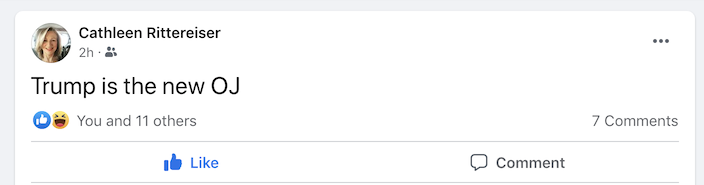
My friend Cathleen Rittereiser says Trump is the new OJ. Both were guilty, but they got off with what amounts to jury nullification.
How the Ozone Layer Was 'Rescued' From a Spike in CFC Slashdotby EditorDavid on earth at January 1, 1970, 1:00 am (cached at February 14, 2021, 4:35 pm)

Thelasko shared this report from the BBC: A steady decline in the levels of ozone-harming CFC chemicals in the atmosphere has resumed, scientists say. This follows a recent, dangerous pause in that downward trajectory, which could have slowed the healing of Earth's protective ozone layer. Atmospheric measurements published in 2018 pointed to illegal CFC production that was occurring in Eastern China. Stopping that production appears to have set the ozone layer's healing process back on track... The conclusions of a chemistry-based detective story, based on work carried out over several years by an international team of researchers, are published in two papers in the journal Nature... Further detective work in China by the Environmental Investigation Agency (EIA) — and by environmental journalists — found that the chemical was being used in the majority of polyurethane insulation foam that was being produced by firms in the region. The scientists stressed that the scale of this illegal production may never be revealed in full. But this combination — of chemistry, investigative journalism and enforcement of the Montreal Protocol, the researchers say, has avoided significant delays to the healing of the ozone layer. Dr. Luke Western, an atmospheric scientist at the University of Bristol, tells the BBC that now "later this century we should see recovery of the ozone layer back to levels that we saw in 1980."

Read more of this story at Slashdot.

[no title] Scripting News(cached at February 14, 2021, 4:33 pm)

Podcast: It's the day after the death of the thing we called Donald Trump. In this podcast I explain how magical things happen in the days after someone you're close to dies. It feels that way with Trump. We got one last look at him, not in person, because the person is gone, the Trump who watched TV and tweeted all day from the White House. Gone, not forgotten, becoming a distant memory. What little is left is finishing up old business, and then will depart for good. It's a 20 minute series of stories. Hope you enjoy!
It's time to say goodbye Scripting News(cached at February 14, 2021, 4:03 pm)

It's time to say goodbye to 45.

[no title] Scripting News(cached at February 14, 2021, 3:33 pm)

BTW, having served on a jury, next time maybe they should require deliberation among the jurors.