Global Smartphone Shipments To Fall 12% this Year on Virus Woes Slashdotby msmash on business at January 1, 1970, 1:00 am (cached at June 3, 2020, 11:35 pm)

Global smartphone shipments will fall nearly 12% to 1.2 billion units in 2020, market research firm IDC said on Wednesday, citing lower consumer spending due to the economic impact of the coronavirus crisis. From a report: The COVID-19 pandemic has not only disrupted business supply chains, with major smartphone makers such as Apple and Samsung Electronics flagging financial hits, but also squeezed consumer spending worldwide. "Nationwide lockdowns and rising unemployment have reduced consumer confidence and reprioritized spending towards essential goods, directly impacting the uptake of smartphones in the short term," said Sangeetika Srivastava, senior research analyst with IDC.

Read more of this story at Slashdot.

Game Publisher Cancels Contract With Developer, Then Tries To Poach Its Entire Team Slashdotby msmash on business at January 1, 1970, 1:00 am (cached at June 3, 2020, 11:05 pm)

Three months after losing a deal with Take-Two, Star Theory Games was out of business. From a report: One Friday evening last December, employees of game designer Star Theory Games each received the same unusual recruitment message over LinkedIn. It struck them as bizarre for two reasons. One, it came from an executive producer at the publishing company funding their next video game. Two, it said the game -- in the works for the previous two years -- was being pulled from their studio. "This was an incredibly difficult decision for us to make, but it became necessary when we felt business circumstances might compromise the development, execution and integrity of the game," Michael Cook, an executive producer at Private Division, a publishing label within Take-Two Interactive Software, wrote in the message, which was reviewed by Bloomberg. "To that end, we encourage you to apply for a position with us." It was strange and disconcerting news to Star Theory's employees. Normally, an announcement like this would be delivered in a companywide meeting or an email from Star Theory's leadership team. The contract with Take-Two was the studio's only source of revenue at the time. Without it, the independent studio was in serious trouble. The LinkedIn message went on to say Take-Two was setting up a new studio to keep working on the same game Star Theory had been developing, a sequel to the cult classic Kerbal Space Program. Take-Two was looking to hire all of Star Theory's development staff to make that happen. "We are offering a compensation package that includes a cash sign-on bonus, an excellent salary, bonus eligibility and other benefits," Cook wrote. When employees returned to the office on Monday, Star Theory founders Bob Berry and Jonathan Mavor convened an all-hands meeting. The two men had been in discussions about selling their company to Take-Two but were dissatisfied with the terms, they explained. The game's cancellation was a shock, but the founders assured staff that Star Theory still had money in the bank and could try to sign other deals, according to five people who attended the meeting and asked not to be identified, citing the risk of litigation. Berry and Mavor encouraged employees to stick together and stay at the company. The next few weeks were chaos, employees said. Take-Two hired more than a third of Star Theory's staff, including the studio head and creative director. By March, as the coronavirus pandemic choked the global economy, any hope of saving the business appeared to be lost, and Star Theory closed its doors.

Read more of this story at Slashdot.

From RealPlayer To Toshiba, Tech Companies Cash in on the Facial Recognition Gold Ru Slashdotby msmash on business at January 1, 1970, 1:00 am (cached at June 3, 2020, 10:35 pm)

At least 45 companies now advertise real-time facial recognition. From a report: More than a decade before Spotify, and years before iTunes, there was RealPlayer, the first mainstream solution to playing and streaming media to a PC. Launched in 1995, within five years RealPlayer claimed a staggering 95 million users. [...] RealPlayer is still very much alive. Now called RealNetworks, a vast majority of its revenue still comes from licensing media software. But the company has also begun dabbling in an industry that's suddenly attracting hundreds of firms, most of which operate outside public scrutiny: facial recognition. Through a startup subsidiary called SAFR, RealNetworks now offers facial recognition for everything from K-12 schools to military drones. The company even claims to have launched a surveillance project in Sao Paulo, Brazil that analyzes video from 2,500 cameras. SAFR has also licensed its technology to Wolfcom, a body camera company that is currently building real-time facial recognition into its products. As first reported by OneZero, Wolfcom's push to bring live facial recognition to hundreds of police departments represents the first such effort within the United States. Though RealNetworks' earnings reports say SAFR doesn't generate significant revenue yet, RealPlayer's evolution is part of a trend of both large global tech companies and small upstart firms becoming key players in the sprawling facial recognition industrial complex. Over the last decade, Japanese tech firm NEC grew a burgeoning division focused on biometrics, alongside its 100-year-old hardware business. Toshiba, best known for making PCs, claims to be running more than 1,000 facial recognition projects around the world, including identity verification systems at security checkpoints in Russia and for law enforcement in Southeast Asia. Even software contractor Microfocus, one of a handful of companies keeping the aging COBOL language alive, is working on making facial recognition that can scale to thousands of CCTV cameras. While many of these companies sell facial recognition technology to verify people's identities in an app, an increasing number are investing in a burgeoning subset of the industry: real-time surveillance, or the ability to recognize individuals in live video footage. Such systems are being sold for law enforcement, military, and security purposes. Many of these companies operate in obscurity, and have never been profiled or scrutinized before.

Read more of this story at Slashdot.

Snapchat To Stop Promoting Trump's Content Slashdotby msmash on social at January 1, 1970, 1:00 am (cached at June 3, 2020, 9:35 pm)

Snapchat said Wednesday it would no longer promote President Donald Trump's content in its Discover section, a move that brings the messaging company closer to Twitter's approach in the ongoing debate over political speech. From a report: The company said in a statement that it would not "amplify voices who incite racial violence." Snapchat's Discover section typically features content from news organizations, brands, celebrities and sometimes politicians. The president's account remains visible on the platform, and anyone can follow the account for updates. Snapchat's change will remove Trump from the Discover section. "We are not currently promoting the president's content on Snapchat's Discover platform," the company said. "We will not amplify voices who incite racial violence and injustice by giving them free promotion on Discover. Racial violence and injustice have no place in our society and we stand together with all who seek peace, love, equality, and justice in America."

Read more of this story at Slashdot.
New Cold Boot Attack Affects Seven Years of LG Android Smartphones Slashdotby msmash on android at January 1, 1970, 1:00 am (cached at June 3, 2020, 9:05 pm)

South Korean phone manufacturer LG has released a security update last month to fix a vulnerability that impacts its Android smartphones sold over the past seven years. From a report: The vulnerability, tracked under the identifier of CVE-2020-12753, impacts the bootloader component that ships with LG smartphones. In March this year, US software engineer Max Thomas discovered a vulnerability in the bootloader component that had been added to LG smartphones starting with the LG Nexus 5 series. In a technical breakdown of the vulnerability published on Tuesday, Thomas says the bootloader component's graphics package contains a bug that lets attackers sneak in their own code to run alongside the bootloader's graphics under certain conditions, such as when the battery dies out and when the device is in the bootloader's Download Mode. Thomas says that threat actors who perfectly time an attack can gain the ability to run their own custom code, which could allow them to take over the bootloader, and inherently the entire device.

Read more of this story at Slashdot.

[no title] Scripting News(cached at June 3, 2020, 8:33 pm)

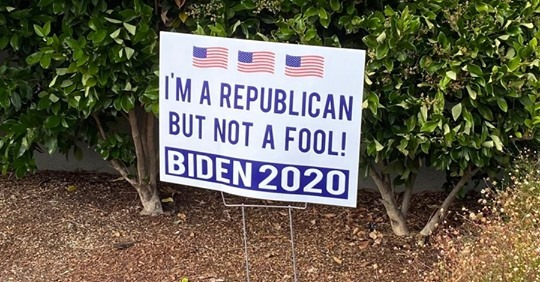
Not a fool.
Stanford Lab Envisions Delivery Drones that Save Energy by Taking the Bus Slashdotby msmash on transportation at January 1, 1970, 1:00 am (cached at June 3, 2020, 8:05 pm)

Researchers from Stanford University have devised a way for hundreds of drones to use the bus or trams in an effort to redesign how packages are distributed in cities. Should such a solution ever scale, it could reduce delivery van congestion and energy usage while extending the distance a drone can travel to deliver a package. From a report: There's a reason most delivery drones we've seen thus far are dropping packages off in the suburbs. Urban centers can be dynamic environments, full of unexpected obstacles, and drones are still not permitted to fly freely through cities. But researchers say using public transportation can increase a drone's range up to 360% beyond travel with flight alone. "Our approach strives to minimize the maximum time to complete any delivery," the team writes in a paper published this week at the online 2020 IEEE International Conference on Robotics and Automation (ICRA). "By combining the strengths of both, we can achieve significant commercial benefits and social impact." This approach, which involves the drones hitching a ride on the outside of buses and trams, could help overcome the limited travel capacity of drones today. The popular DJI Mavic 2, for example, is able to fly a maximum distance of 18 kilometers, or about 11 miles round trip.

Read more of this story at Slashdot.

[no title] Scripting News(cached at June 3, 2020, 8:03 pm)

He just starts kissing them.
Google Removes Viral Chinese-App Scanner From the Play Store Slashdotby msmash on android at January 1, 1970, 1:00 am (cached at June 3, 2020, 7:35 pm)

Remove China Apps, the viral Android app for flagging software made in China, has been removed from Google's Play Store. From a report: Before its demise, the app had reached the coveted number-one free download spot on the Play Store. The app was removed for violating Google's "Deceptive Behavior Policy," which states that apps cannot incentivize users to disable or remove other applications. Though Remove China Apps did not remove apps automatically, it did prompt users to do so. It had been downloaded more than 5 million times before its removal. Google is notoriously bad at policing its own Play Store, so the swift removal here is something of an outlier. The app's quick rise to fame made waves, especially in its home market of India, which likely led to a faster-than-usual investigation on Google's part.

Read more of this story at Slashdot.

Microsoft's New Edge Browser Now Rolling Out via Windows Update Slashdotby msmash on microsoft at January 1, 1970, 1:00 am (cached at June 3, 2020, 7:05 pm)

Microsoft is starting to roll out its new Edge browser through Windows Update. The new Chromium-based version of Edge launched in January, but Windows users had to specifically download it. From a report: A Microsoft support article notes that it's now available on Windows Update, meaning it will soon arrive on the more than 1 billion Windows 10 devices in use. It appears that Edge will be automatically installed through Windows Update on Windows 10 version 1803 and higher. That covers the vast majority of versions of Windows 10 that are currently supported, meaning it should start showing up in Windows Update for everyone soon. As always, this is a gradual rollout, so you might not see it immediately on Windows Update just yet.

Read more of this story at Slashdot.

AMC Theatres Has 'Substantial Doubt' it Can Remain in Business Slashdotby msmash on business at January 1, 1970, 1:00 am (cached at June 3, 2020, 6:05 pm)

AMC Theatres, the world's biggest movie theater chain, said on Wednesday that it has "substantial doubt" it can remain in business after closing locations across the globe during the coronavirus pandemic. From a report: The theater chain, which closed its theaters earlier this year, expects to have lost between $2.1 billion and $2.4 billion in the first quarter. The company also said that its revenue fell to $941.5 million, which was down roughly 22% from $1.2 billion in the same quarter last year. This quarter, the situation has gotten substantially worse. "We are generating effectively no revenue," the company said in a regulatory filing Wednesday. AMC will continue to monitor the "potential lifting of various government operating restrictions," but added that the chain has serious challenges even if restrictions are lifted. That includes studios holding back new films from being shown. "Even if governmental operating restrictions are lifted in certain jurisdictions, distributors may delay the release of new films until such time that operating restrictions are eased more broadly domestically and internationally, which may further limit our operations," the company said. The company said that it had a cash balance of $718.3 million as of April.

Read more of this story at Slashdot.

Huawei Hid Business Operation in Iran After Reuters Reported Links To CFO Slashdotby msmash on china at January 1, 1970, 1:00 am (cached at June 3, 2020, 5:35 pm)

China's Huawei acted to cover up its relationship with a firm that had tried to sell prohibited U.S. computer gear to Iran, after Reuters in 2013 reported deep links between the firm and the telecom-equipment giant's chief financial officer, newly obtained internal Huawei documents show. From the report: Huawei has long described the firm -- Skycom Tech -- as a separate local business partner in Iran. Now, documents obtained by Reuters show how the Chinese tech titan effectively controlled Skycom. The documents, reported here for the first time, are part of a trove of internal Huawei and Skycom Iran-related business records -- including memos, letters and contractual agreements -- that Reuters has reviewed. One document described how Huawei scrambled in early 2013 to try to "separate" itself from Skycom out of concern over trade sanctions on Tehran. To that end, this and other documents show, Huawei took a series of actions -- including changing the managers of Skycom, shutting down Skycom's Tehran office and forming another business in Iran to take over tens of millions of dollars worth of Skycom contracts. The revelations in the new documents could buttress a high-profile criminal case being pursued by U.S. authorities against Huawei and its chief financial officer, Meng Wanzhou, who is also the daughter of Huawei's founder. The United States has been trying to get Meng extradited from Canada, where she was arrested in December 2018. A Canadian judge last week allowed the case to continue, rejecting defense arguments that the U.S. charges against Meng do not constitute crimes in Canada. A U.S. indictment alleges that Huawei and Meng participated in a fraudulent scheme to obtain prohibited U.S. goods and technology for Huawei's Iran-based business via Skycom, and move money out of Iran by deceiving a major bank. The indictment alleges that Skycom was an "unofficial subsidiary" of Huawei, not a local partner.

Read more of this story at Slashdot.

Latest Satoshi Nakamoto Candidate Buying Bitcoin No Matter What Slashdotby msmash on bitcoin at January 1, 1970, 1:00 am (cached at June 3, 2020, 5:05 pm)

Adam Back's name has surfaced again in the crypto community's favorite guessing game: Who is the anonymous creator of Bitcoin who went by the pseudonym Satoshi Nakamoto. From a report: In mid-May, YouTube channel Barely Sociable, with nearly 400,000 subscribers, released a 40-minute video claiming that 49-year-old Back is Satoshi. The video has since raked up nearly 300,000 views. Back does check off a lot of the boxes: He is a British cryptographer with a PhD in computer science, who, back in the 1990s, invented Hashcash, a system of verification that Bitcoin uses. He is also the first person Satoshi contacted online in 2008, asking about Hashcash. So is he Satoshi? "No, I am not," Back said in a June 1 phone interview from Malta. But he also pointed out it's better for the creator of the world's largest cryptocurrency to remain a mystery. "It's generally viewed at this point as better that the founder of Bitcoin is not known, because a lot of people have a hierarchical mindset," Back said. "If you read about a technology, you try to figure out who is the CEO of a company, and people want to ask questions. Because Bitcoin is more like a digital gold, you wouldn't want gold to have a founder. For Bitcoin to keep a commodity-like perception, I think it's a very good thing that Satoshi stays out of the public."

Read more of this story at Slashdot.

[no title] Scripting News(cached at June 3, 2020, 4:33 pm)

A lasting image from the 60s.
Zoom Won't Encrypt Free Calls Because it Wants To Comply With Law Enforcement Slashdotby msmash on privacy at January 1, 1970, 1:00 am (cached at June 3, 2020, 4:05 pm)

If you're a free Zoom user, and waiting for the company to roll out end-to-end encryption for better protection of your calls, you're out of luck. From a report: Free calls won't be encrypted, and law enforcement will be able to access your information in case of 'misuse' of the platform. Zoom CEO Eric Yuan today said that the video conferencing app's upcoming end-to-end encryption feature will be available to only paid users.

Read more of this story at Slashdot.