Health Officials Worry About Possible Lack of Cooperation on Coronavirus Vaccines Slashdotby EditorDavid on medicine at January 1, 1970, 1:00 am (cached at May 3, 2020, 11:05 pm)

Global health officials and diplomats are "alarmed" by America's "apparent lack of interest in cooperation" on international efforts for a vaccine against Covid-19. Slashdot reader Charlotte Web quotes this report from Politico: The fear is that Trump will be content with allowing the race to develop and distribute the vaccine to devolve into a global contest -- and that poorer countries will be left behind in the rush to procure doses. In essence: that the president's "America First" view of world affairs as an atavistic scramble for power will lead to unnecessary suffering and death. "The worst situation would be, if when these tools are available, they go to the highest bidder -- that would be terrible for the world," said Melinda Gates, who, along with her tech entrepreneur husband, Bill, leads a powerful foundation that has devoted billions to health research. "Covid-19 anywhere is Covid-19 everywhere. And that's why it's got to take global cooperation." The ongoing global scramble for masks, gloves and other personal protective gear offers a harrowing and potentially instructive example. Now imagine, officials and experts say, a similar competition to obtain vaccine doses: It could drag out the health crisis by letting the virus spread for longer than it otherwise might, devastating the very countries least equipped to fight it... It's not just the U.S. that has put the needs of its own citizens first. Dozens of countries, including the U.S. and some in Europe, have imposed travel restrictions as well as limits on the exports of masks and other critical medical equipment. Global health leaders are trying to avoid a repeat of such nationalist tactics when it comes to vaccines and other types of medicines that could combat Covid-19. "Health officials and analysts caution that it's too early to go into full-fledged panic about a looming global vaccine fistfight," the article notes. But it also points out that "There's no binding treaty or other mechanism that governs how a vaccine will be produced and distributed worldwide."

Read more of this story at Slashdot.
Social distancing and coronavirus: The science behind the two-metre rule BBC News | Science/Nature | UK Edition(cached at May 3, 2020, 10:30 pm)

Ministers are reportedly considering relaxing the two-metre rule for social distancing in workplaces.
What Keeps Developers Happy? Contributing to Open Source Slashdotby EditorDavid on opensource at January 1, 1970, 1:00 am (cached at May 3, 2020, 10:05 pm)

This week long-time open source advocate Matt Asay warned employers that the best way to keep their developers happy was to let them contribute to open source projects: SlashData recently surveyed over 16,000 developers to see what makes them tick... what they care about. The data is collected in SlashData's State of the Developer Nation, though let me give you the tl;dr: 59% of developers contribute to open source software today. Why do they contribute? The top two reasons are: To improve coding skills and because they believe in open source. Want to keep those developers happy and employed with you? Let them contribute... [Y]our employees want to contribute both code and knowledge — they want to be part of something. Talking to Bert Hubert, founder of PowerDNS, a supplier of open source DNS software, services, and support, he stressed that an open source project must be "a fun place where people feel that they are learning things, that they're contributing things, that they're being valued." Perhaps not surprisingly, these are the same elements developers expect from their employers. By making open source a valued part of workplace expectations, employers tick both boxes. Is it an absolute requirement that you encourage your developers to contribute to open source projects? No. But many of your best developers will chafe at keeping their talents locked up behind the firewall, and other developers simply won't apply if you have a reputation for being an open source scrooge. The article was written by Matt Asay, a former COO of Canonical now working at AWS. (Right before becoming Canonical's COO, Matt answered questions from Slashdot readers). The survey he cites also found that out of 17,000 developers they talked to, just 3% said they were paid to contribute to open source. The other 97% contributed for free.

Read more of this story at Slashdot.

[no title] Scripting News(cached at May 3, 2020, 9:03 pm)

People seem to feel it's over, but that's just a form of mass hysteria, they see the weather changing, winter is finally over, summer is here, we must have survived, time to go out and play. That's evolution for you. Of course the virus is still out there hunting us.
[no title] Scripting News(cached at May 3, 2020, 9:03 pm)

Such a beautiful day , almost summer weather, everything is in bloom now. Winter is finally over. I rode my bike both yesterday and today. Lovely.
Google's reCAPTCHA Is Being Used To Hide Phishing Pages Slashdotby EditorDavid on google at January 1, 1970, 1:00 am (cached at May 3, 2020, 8:35 pm)

An anonymous reader quotes Infosecurity magazine: New research from Barracuda Networks has revealed that cyber-criminals are increasingly using official reCAPTCHA walls to disguise malicious content from email security systems and trick unsuspecting users... [S]ophisticated scammers are beginning to use the Google-owned service to prevent automated URL analysis systems from accessing the actual content of phishing pages, and to make phishing sites more believable in the eyes of the victim, Barracuda Networks warned. In fact, the security solutions provider observed a single phishing campaign that sent out 128,000 emails to a variety of organizations and employees using reCAPTCHA walls to conceal fake Microsoft log-in pages. This campaign used the lure of a voicemail receipt to fool users into solving the reCAPTCHA wall before being redirected to the malicious page, with any log-in info entered then sent straight to the scammers.

Read more of this story at Slashdot.

Could Open-Source Medicine Prepare Us For The Next Pandemic? Slashdotby EditorDavid on medicine at January 1, 1970, 1:00 am (cached at May 3, 2020, 7:35 pm)

"A new, Linux-like platform could transform the way medicine is developed — and energize the race against COVID-19," reports Fast Company, while arguing that the old drug discovery system "was built to benefit shareholders, not patients." Fast Company's technology editor harrymcc writes: Drug development in the U.S. has traditionally been cloistered and profit-motivated, which means that it has sometimes failed to tackle pressing needs. But an initiative called the Open Source Pharma Foundation hopes to apply some of the lessons of open-source software to the creation of new drugs — including ones that could help fight COVID-19. From the article: The response to COVID-19 has been more open-source than any drug effort in modern memory. On January 11, less than two weeks after the virus was reported to the World Health Organization, Chinese researchers published a draft of the virus's genetic sequence. The information enabled scientists across the globe to begin developing tests, treatments, and vaccines. Pharmaceutical companies searched their archives for drugs that might be repurposed as treatments for COVID-19 and formed consortiums to combine resources and expedite the process. These efforts have yielded some 90 vaccine candidates, seven of which are in Phase I trials and three of which are advancing to Phase II. There are nearly 1,000 clinical trials listed with the Centers for Disease Control and Prevention related to COVID-19. The gathering of resources and grassroots sharing of information aimed at combating the coronavirus has put open-source methods of drug development front and center. "It's our moment," said Bernard Munos, a former corporate strategist at pharma company Eli Lilly... Munos has been arguing for an open-source approach to developing drugs since 2006. "A lot is at stake because if it's successful, the open-source model can be replicated to address other challenges in biomedical research." So now the Open Source Pharma Foundation hopes to offer "a platform where scientists and researchers can freely access technological tools for researching disease, share their discoveries, launch investigations into molecules or potential drugs, and find entities to turn that research into medicine..." according to the article. "If the platform succeeds, it would allow drugs to succeed on their merit and need, rather than their ability to be profitable."

Read more of this story at Slashdot.

20 Years Later, Creator of World's First Major Computer Virus Located in Manila Slashdotby EditorDavid on security at January 1, 1970, 1:00 am (cached at May 3, 2020, 7:05 pm)

"The man behind the world's first major computer virus outbreak has admitted his guilt, 20 years after his software infected millions of machines worldwide," reports the BBC: Filipino Onel de Guzman, now 44, says he unleashed the Love Bug computer worm to steal passwords so he could access the internet without paying. He claims he never intended it to spread globally. And he says he regrets the damage his code caused. "I didn't expect it would get to the US and Europe. I was surprised," he said in an interview for Crime Dot Com, a forthcoming book on cyber-crime. The Love Bug pandemic began on 4 May, 2000. Victims received an email attachment entitled LOVE-LETTER-FOR-YOU. It contained malicious code that would overwrite files, steal passwords, and automatically send copies of itself to all contacts in the victim's Microsoft Outlook address book. Within 24 hours, it was causing major problems across the globe, reportedly infecting 45 million machines... He claims he initially sent the virus only to Philippine victims, with whom he communicated in chat rooms, because he only wanted to steal internet access passwords that worked in his local area. However, in spring 2000 he tweaked the code, adding an auto-spreading feature that would send copies of the virus to victims' Outlook contacts using a flaw in Microsoft's Windows 95 operating system. "It's not really a virus," wrote CmdrTaco back on May 4, 2000. "It's a trojan that proclaims its love for the recipient and requests that you open its attachment. On a first date even! It then loves you so much that it sends copies of itself to everyone in your address book and starts destroying files on your drive... "Pine/Elm/Mutt users as always laugh maniacally as the trojan shuffles countless wasted packets over saturated backbones filling overworked SMTP servers everywhere. Sysadmins are seen weeping in the alleys."

Read more of this story at Slashdot.

[no title] Scripting News(cached at May 3, 2020, 7:03 pm)

It's great to get John Naughton's nightly email. He writes frequently about contact tracing, as he did last night. I believe that our phones can help with contact tracing, and we should be willing to give up some privacy. This is an emergency. I don't agree with Schneier who dismisses the help mobile devices could offer, but some of the comments on his post were right on, imho. More later for sure.
[no title] Scripting News(cached at May 3, 2020, 6:33 pm)

Maybe journalism can stop tiptoeing around the plan, and just say what it is. 1. Reduce new infections to zero. 2. Contact tracing. 3. Low-cost, fast testing. That's how we get out of this.
[no title] Scripting News(cached at May 3, 2020, 6:03 pm)

A video from President Bush. It's not hard to say the right words.
After the Pandemic, Will Big Tech Companies Be Unstoppable? Slashdotby EditorDavid on technology at January 1, 1970, 1:00 am (cached at May 3, 2020, 5:35 pm)

After the pandemic is over, "The tech giants could have all the power," warns Recode co-founder Kara Swisher, " and absolutely none of the accountability — at least all the power that will truly matter." This is the conclusion that many are coming to as the post-pandemic future begins to come into focus. Wall Street sure is signaling that the power lies with tech companies, vaulting the stock of Amazon to close to $2,400 a share earlier this week, from $1,838 at the end of January. While the price fell on Friday to $2,286 a share, after Amazon's chief executive, Jeff Bezos, said he would spend future profits on the coronavirus response, that still gives the company a value of $1.14 trillion. And all the other Big Tech stocks, which were hit in the first weeks of the pandemic, also are on an upward march to the top of the market-cap heap. Microsoft at $1.32 trillion. Apple at $1.26 trillion. Alphabet at $900 billion. And Facebook at $577 billion. This group now makes up just over 20 percent of the S.&P. 500, which is a flashing yellow signal of what is to come. That is to say, we live in a country in which the very big tech firms will be the very big winners in the economy of the future, which still does not look like it will be so pretty for most people and many companies, too... I neither hate tech nor think most people who work in tech are bad people. But when this crisis is over, I can say that we most certainly should fear Big Tech more because these companies will be freer than ever, with many fewer strictures on them from regulators and politicians. The effort to rein in tech companies had been building decent momentum before coronavirus outbreak, but it will be harder when focus needs to be on building up rather than breaking apart. Now, as we turn to the healthy companies to help us revive the economy, it could be that the only ones with real immunity are the tech giants. In this way, Covid-19 has accelerated their rise and tightened their grip on our lives. And this consolidation of power, combined with Big Tech's control of data, automation, robotics, artificial intelligence, media, advertising, retail and even autonomous tech, is daunting.

Read more of this story at Slashdot.

Beware of Emails Impersonating 'Microsoft Teams' Notifications Slashdotby EditorDavid on microsoft at January 1, 1970, 1:00 am (cached at May 3, 2020, 5:05 pm)

Researchers at the email security company Abnormal Security have discovered "a multi-prong Microsoft Teams impersonation attack" involving "convincingly-crafted emails impersonating the automated notification emails from Microsoft Teams," reports Forbes: The aim, simply to steal employee Microsoft Office 365 login credentials. To date, the researchers report that as many as 50,000 users have been subject to this attack as of May 1. This is far from your average phishing scam, however, and comes at precisely the right time to fool already stressed and somewhat disoriented workers. Instead of the far more commonly used "sort of look-alike" alerts and notifications employed by less careful cybercriminals, this new campaign is very professional in approach. "The landing pages that host both attacks look identical to the real webpages, and the imagery used is copied from actual notifications and emails from this provider," the researchers said. The attackers are also using newly-registered domains that are designed to fool recipients into thinking the notifications are from an official source... As far as the credential-stealing payload is concerned, this is delivered in an equally meticulous way. With multiple URL redirects employed by the attackers, concealing the real hosting URLs, and so aiming to bypass email protection systems, the cybercriminals will eventually drive the user to the cloned Microsoft Office 365 login page.

Read more of this story at Slashdot.

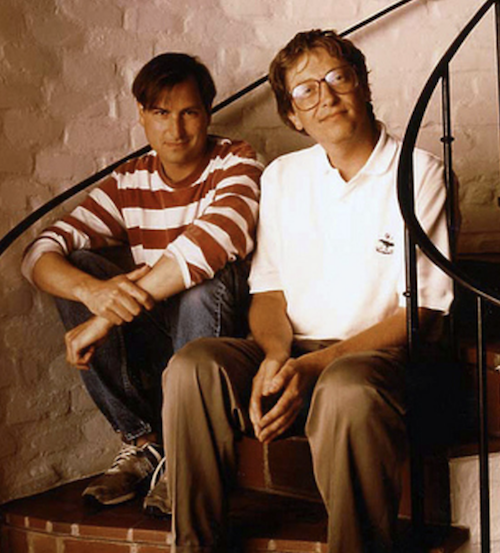
Bill Gates fights for science Scripting News(cached at May 3, 2020, 4:33 pm)

It's been a long time since Bill Gates and I were in the same industry. I always respected his mind and drive. He once tried to buy my company, but then changed his mind. But I've done well, I've achieved most of my goals -- but always wonder -- what if I had been at Microsoft in the late 80s and 90s. Would I have been able to create Frontier? If I had, it probably would have had more lasting impact. And what about when the web came along, would I have been able to convince Gates, from within Microsoft, not to try to own it?

Eventually, through the power of the web, I was able to at least chronicle the fight between open and corporate platforms, a story in which Gates was a major character, maybe the major character. I wonder if we had worked together instead, how things might have turned out. But that's water under the bridge, by now ancient history.

We often wait to say the good things about people until they're gone and can't hear it. I just wanted to say about Bill Gates, he's doing good now. Standing up for science at a time when that can save a lot of lives, maybe even save our civilization. He doesn't have to take a risk now, he could, like other super rich people, isolate himself perfectly and ride out the storm quietly. Instead he's put himself out there, standing for what's right, and you know what, that's good, and thanks to him for doing that.

Emulating 'Trolls', More Movies Try Bypassing Cinemas For On-Demand Releases Slashdotby EditorDavid on movies at January 1, 1970, 1:00 am (cached at May 3, 2020, 3:35 pm)

Trolls World Tour won't be the last major-studio release to bypass movie theatres altogether. An anonymous reader quotes the Guardian: Universal gets a greater cut of revenue from digital services than at the box office, which means the film has made the same amount of profit in its first three weeks as the first Trolls film did during its entire five-month run in U.S. cinemas.... "Universal has cast the first stone," said Jeff Bock, an analyst at research firm Exhibitor Relations. "This is exactly what the theatrical exhibition world had always feared -- proof that bypassing theatres could be a viable model of distribution for studios. "Like it or not, the floodgates have opened. This is just the beginning, and the longer it takes for theatres to open on a worldwide scale, we're going to see the premium-video-on-demand schedule become more and more populated." That schedule is now filling up. Universal announced last week that Judd Apatow's new comedy The King of Staten Island would scrap its planned cinema release on 19 June and premiere on-demand instead. And Warner Bros is doing the same with Scoob!, the first full-length animated Scooby-Doo film, which was meant to hit cinemas on 15 May... The straight-to-digital strategy is only considered to be viable for mid- and lower-budget films forecast to earn at most a few hundred million at the global box office.

Read more of this story at Slashdot.