DirectX 12 Ultimate is an Attempt To 'Future-Proof' Graphics Hardware Slashdotby msmash on games at January 1, 1970, 1:00 am (cached at March 19, 2020, 11:04 pm)

A new DirectX badge is going to start showing up on graphics hardware: It's called DirectX 12 Ultimate, and it denotes support for "ALL next generation graphics hardware features," Microsoft announced today. From a report: DirectX is a collection of application programming languages (APIs) that developers use to communicate with your hardware. You can think of it like a conduit between software (especially games) and hardware. Up until now, DX12 was the latest version, supported in Windows 10 (and also in Windows 7 for some games). Now that distinction belongs to DX12 Ultimate. It's not an overhaul of the API, but a culmination of the latest technologies bundled into one. This notably includes DirectX Raytracing (DXR), variable rate shading (VRS), mesh shaders, and sampler feedback. One of the reasons Microsoft is doing this is to unify experiences across the PC and its upcoming Xbox Series X, which will launch November 26, 2020 (Thanksgiving Day). "These features represent many years of innovation from Microsoft and our partners in the hardware industry. DX12 Ultimate brings them all together in one common bundle, providing developers with a single key to unlock next generation graphics on PC and Xbox Series X," Microsoft explains. The main benefit for gamers is knowing, at a glance, if the graphics card they are about to buy supports all the latest features. Spotting the DX12 Ultimate badge is the key, and I suspect hardware makers will be quick to promote it. Related to that, Microsoft is pitching this as a way of ensuring "future-proof" feature support. There's no such thing as future proofing, of course, but DX12 Ultimate should remain relevant for at least the next couple of years.

Read more of this story at Slashdot.

Intel's Neuromorphic Chip Learns To 'Smell' 10 Hazardous Chemicals Slashdotby BeauHD on intel at January 1, 1970, 1:00 am (cached at March 19, 2020, 10:34 pm)

Researchers from Intel and Cornell University trained a neuromorphic chip to learn and recognize the scents of 10 hazardous chemicals. Engadget reports: Using Intel's Loihi, a neuromorphic chip, the team designed an algorithm based on the brain's olfactory circuit. When you take a whiff of something, molecules stimulate olfactory cells in your nose. Those cells send signals to the brain's olfactory system, which then fires off electrical pulses. The researchers were able to mimic that circuitry in Loihi's silicon circuits. According to Intel, the chip can identify 10 smells, including acetone, ammonia and methane, even when other strong smells are present. And, Loihi learned each odor with just a single sample. That's especially impressive, the researchers say, because other deep learning techniques can require 3,000 times more training samples to reach the same level of accuracy. The work has been published in the journal Nature Machine Intelligence.

Read more of this story at Slashdot.

Twitter Broadly Bans Any COVID-19 Tweets That Could Help the Virus Spread Slashdotby BeauHD on twitter at January 1, 1970, 1:00 am (cached at March 19, 2020, 10:04 pm)

An anonymous reader quotes a report from TechCrunch: On Wednesday, Twitter updated its safety policy to prohibit tweets that "could place people at a higher risk of transmitting COVID-19." The new policy bans tweets denying expert guidance on the virus, encouraging "fake or ineffective treatments, preventions and diagnostic techniques" as well as tweets that mislead users by pretending to be from health authorities or experts. In its blog post, Twitter says that it will "require people to remove Tweets" in these cases and we've asked the company for more clarification on what that looks like. Twitter indicated that it will take context like account history into account in making its enforcement determinations, which it says remain unchanged. As far as having users remove offending tweets, according to the company's existing guidance "When we determine that a Tweet violated the Twitter Rules, we require the violator to remove it before they can Tweet again." A user is notified of this via email and given a chance to delete the tweet or make an appeal. While that is happening, the tweet is hidden from view. Under the ruleset, a tweet that claims "social distancing is not effective" would be subject to removal. Twitter will also require users to delete tweets telling followers to do ineffective or dangerous things like drinking bleach, even if the tweet is "made in jest" because that content can prove harmful when taken out of context. Twitter is banning tweets encouraging people to behave in a way counter to what health authorities recommend. The rules will also prohibit users from playing armchair doctor, as well as making coronavirus claims that single out groups of people based on race or nationality.

Read more of this story at Slashdot.

[no title] Scripting News(cached at March 19, 2020, 9:33 pm)

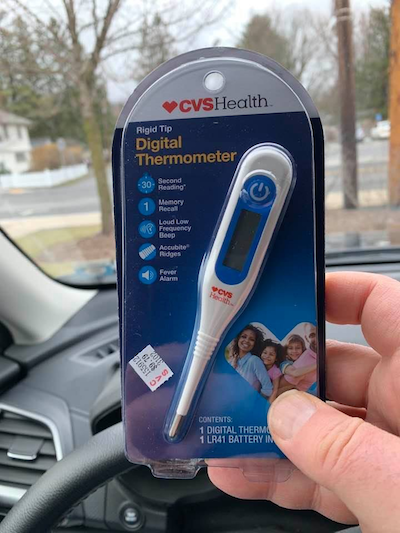
I got a thermometer. My temperature is 98.1.
Intel Says It Is Delivering More Than 90% of Products on Time Slashdotby msmash on intel at January 1, 1970, 1:00 am (cached at March 19, 2020, 9:04 pm)

Intel, the world's biggest chipmaker, said it's maintaining above 90% on-time delivery of its products from factories worldwide. From a report: Chief Executive Officer Bob Swan told customers in a letter posted on the company's website that he is "inspired by the deep commitment of our teams to sustain our manufacturing, assembly, test and supply chain operations in Oregon, New Mexico, California and Arizona, as well as Israel, Ireland, China, Malaysia, Vietnam and other Intel and partner locations around the world." "They are working hard to make sure you can continue to be successful," he added. Intel's products are essential components of personal computers and the server machines that run corporate networks and the internet. Continued output from its factories is a vital part of the global supply chain as the technology industry scrambles to deal with the effects of the pandemic. Semiconductor plants are some of the most automated facilities in the world and require very little human involvement directly in the manufacturing process. The electronic components take as long as three months to get through the multistep process. That means chips coming out of Intel's plants now would have been started before the Covid-19 virus kicked in and caused a lockdown of big chunks of the world's population.

Read more of this story at Slashdot.

Netflix To Reduce EU Bandwidth by 25% Slashdotby msmash on eu at January 1, 1970, 1:00 am (cached at March 19, 2020, 8:34 pm)

Netflix is cutting back on the bandwidth it takes to stream videos to members in the European Union after a European Commission member voiced concerns over network strain. From a report: "Following the discussions between Commissioner Thierry Breton and Reed Hastings -- and given the extraordinary challenges raised by the coronavirus -- Netflix has decided to begin reducing bit rates across all our streams in Europe for 30 days," a Netflix spokesperson told Protocol. "We estimate that this will reduce Netflix traffic on European networks by around 25 percent while also ensuring a good quality service for our members."

Read more of this story at Slashdot.

FDA Testing Coronavirus Treatments, Including Chloroquine, Plasma From Recovered COV Slashdotby msmash on medicine at January 1, 1970, 1:00 am (cached at March 19, 2020, 8:04 pm)

U.S. Food and Drug Administration Commissioner Stephen Hahn addressed the ongoing work of the agency in terms of its work on potential treatments and vaccines for the COVID-19 coronavirus currently spreading globally. From a report: Despite a claim early in Thursday's White House briefing on the pandemic by President Donald Trump that one proposed treatment, anti-malarial chloroquine, had already been approved by the FDA for COVID-19 treatment, Hahn said that in fact the agency is currently looking at widespread clinical trials of the drug, but it is not yet approved for that use. "In the short term, we're looking at drugs that are already approved for other indications," Dr. Hahn said. "Many Americans have read studies and heard media reports about this drug chloroquine, which is an anti-malarial drug. It's already approved, as the president said, for the treatment of malaria [Trump had not said this, but had instead said it was now approved for COVID-19] as well as an arthritis condition. That's a drug that the president has directed us to take a closer look at, as to whether an expanded use approach to that could be done to actually see if that benefits patients. And again, we want to do that in the setting of a clinical trial, a large pragmatic clinical trial to actually gather that information and answer the question that needs to be answered." Another potential treatment which has shown signs of possible positive effect, remdesivir, was also cited by Trump as being very "near" approval for use by the FDA. Hahn clarified that in fact, while remdesivir is currently undergoing clinical trials, it's following the normal FDA process for approval for clinical medical therapeutic use in the U.S.

Read more of this story at Slashdot.

Scribd is Giving Away 1 Month of Unlimited Access For Free Slashdotby msmash on books at January 1, 1970, 1:00 am (cached at March 19, 2020, 7:04 pm)

Reading subscription service Scribd is offering free access to its library of over one million ebooks, audiobooks, magazines and more for the next 30 days (no commitment or credit card information required). From a report: Scribd told Good e-Reader that "with the spread of COVID-19 and new regulations put into effect, we know many people are staying close to home, yet still looking for information, distractions and perhaps a mental escape. Scribd wants to support the community by giving people access to the world's largest library during this global health crisis, and do our small part in helping consumers through times of uncertainty."

Read more of this story at Slashdot.

[no title] Scripting News(cached at March 19, 2020, 7:02 pm)

Renting cruise ships seems like a good idea. Park them in the Hudson River, and use them for isolation. They have all the systems you need to keep people going. Or better yet instead of bailing out the cruise ship lines, buy the boats. We're going to need them for a long time. And will want to modify them.
99% of Those Who Died From Virus Had Other Illness, Italy Says Slashdotby msmash on medicine at January 1, 1970, 1:00 am (cached at March 19, 2020, 6:34 pm)

More than 99% of Italy's coronavirus fatalities were people who suffered from previous medical conditions, according to a study [PDF] by the country's national health authority. Reader schwit1 shares a report: The new study could provide insight into why Italy's death rate, at about 8% of total infected people, is higher than in other countries. The Rome-based institute has examined medical records of about 18% of the country's coronavirus fatalities, finding that just three victims, or 0.8% of the total, had no previous pathology. Almost half of the victims suffered from at least three prior illnesses and about a fourth had either one or two previous conditions. More than 75% had high blood pressure, about 35% had diabetes and a third suffered from heart disease.

Read more of this story at Slashdot.

Firefox To Remove Support For the FTP Protocol Slashdotby msmash on firefox at January 1, 1970, 1:00 am (cached at March 19, 2020, 6:04 pm)

Mozilla has announced plans to remove support for the FTP protocol from Firefox. Going forward, users won't be able to download files via the FTP protocol and view the content of FTP links/folders inside the Firefox browser. From a report: "We're doing this for security reasons," said Michal Novotny, a software engineer at the Mozilla Corporation, the company behind the Firefox browser. "FTP is an insecure protocol and there are no reasons to prefer it over HTTPS for downloading resources," he said. "Also, a part of the FTP code is very old, unsafe and hard to maintain and we found a lot of security bugs in it in the past." Novotny says Mozilla plans to disable support for the FTP protocol with the release of Firefox 77, scheduled for release in June this year.

Read more of this story at Slashdot.

[no title] Scripting News(cached at March 19, 2020, 6:02 pm)

Jen is now on the plane. Reminds me of this scene in Casablanca.
On iPad Getting a Trackpad Slashdotby msmash on apple at January 1, 1970, 1:00 am (cached at March 19, 2020, 5:04 pm)

Apple on Wednesday announced the Magic Keyboard that will work with newly unveiled iPad Pro models and some previous generation iPads. Is this the "convergence" everyone had been waiting for? A "2 in 1" or a tablet or a toaster-refrigerator? Did Apple capitulate? Some context on evolution of devices, from Steven Sinofsky, former President of the Windows Division at Microsoft. He writes: Hardware evolves just like software but we don't often see it the same way. We're used to talking about the cycle software bundling and unbundling, but hardware does the same thing. Every new generation of hardware begins this cycle anew. Certainly we're used to hardware adding ports or absorbing new technologies over time. Where things get really interesting with hardware is when a new "form" is introduced, often the first step is jettisoning many features from the leader. With the introduction of a form, the debate immediately begins over whether the new form can take over or whether it is a substitute for the old one. Tech dialog is rather divisive over these questions (dodged by marketing). "It can never work" or "It will eventually work." The industry works hard to create these dividing lines. The way it does this is first because usually there are new manufacturers that make the new form. Second, pundits attach labels to form factors and begin a process of very specific definitions (dimensions, peripherals.) The first one of these transitions I remember is the introduction of portable computers. Out of the gate, these were way less powerful than "PCs." The debate over whether a portable can "replace" a "PC" was in full force. Quickly the form factor of portable evolved and with that came all sorts of labels: luggable, portable, notebook, desktop, sub-notebook, and so on. This continued all the way until the introduction of "ultra-books." If you're a maker these labels are annoying at best. (1987) Quite often these are marketing at work -- manufacturers looking to differentiate an otherwise commodity product create a new name for the old thing done slightly differently. Under the hood, however, the forms are evolving. In fact the way they are evolving is often surprising. The evolution of new forms almost always follows the surprising pattern of *adding back* all those things from the old form factor. So all those portables, added more floppies, hard disks, then expansion through ports/docks, and then ultimately CPUs as powerful as desktop. Then we wake up one day and look at the "new" form and realize it seems to have morphed into the old form, capabilities and all. All along the way, the new form is editing, innovating, and reimagining how those old things should be expressed in the new one. These innovations can change software or hardware. But this is where hardware devices like USB come from -- the needs of the new form dictate new types of hardware even if it solves the same problem again. The evolution of PCs to become Servers offers an interesting arc. PCs were literally created to be smaller and less complex computers. They eliminated all the complexity of mainframes at every level while making computing accessible and cheap. When first PCs began to do server tasks, they did those in an entirely different way than mainframes that were servers of the day. They used commodity desktop PCs -- literally the same as a desktop running in an office. That was the big advantage -- cheap, ubiquitous, open! Mainframe people balked at this crazy notion. It was an obvious moment of "that is a toy." Then the age of client server computing was before us, starting in the late 1990s. But what followed was a classic case of convergent evolution. PC Servers started to add attributes of mainframes. At first this seemed totally crazy -- redundant power supplies, RAID, multi processors, etc. THAT was crazy stuff for those $1M mainframes. Pretty soon at h/w level telling a PC Server from a MF became a vocabulary exercise. And here we are today where server to stripped the very elements rooted in PC (like monitors and keyboards!) Guess what? That's a mainframe! On Twitter, this would be: "Mainframe, you've invented a mainframe. Except, the operating system and software platform is entirely different. The evolution was not a copy, but a useful convergence done through an early series of steps copying followed by distinct and innovative approaches that created a new value ... a new form factor. So here we are today with an iPad that has a trackpad. Many are chuckling at the capitulation that the iPad was never a real computer and finally Apple admitted it. Laptop, Apple has invented the laptop. This was always going to happen. From the earliest days there were keyboard cases that turned iPads into "laptops" (w/o trackpads) and these could be thought of as experiments copying the past. It took time (too much?) to invent the expression of the old in the new. The PC server everyone uses in the cloud today is no mainframe. It is vastly cheaper, more accessible, more scaleable, runs different software (yes people will fight me on these in some way, but the pedantic argument isn't the point). Adding a trackpad to iPad was done in a way that reimagined not just the idea of a pointer, but in the entire package -- hardware and software. That's what makes this interesting. To think of it as capitulation would be to do so independent of how computing has evolved over decades.

Read more of this story at Slashdot.

What comes next Scripting News(cached at March 19, 2020, 5:02 pm)

I've been pretty frank here as the crisis developed in February and early March, and we now are much further along, and there's more bad news coming. I'm inferring this from what I've heard about what has already happened in north Italy, and what we know is happening here, from doctors, and public info. You can find links to all my sources on the home page of Scripting News.

Microsoft Teams Passes 44 Million Daily Active Users, Thanks in Part To Coronavirus Slashdotby msmash on business at January 1, 1970, 1:00 am (cached at March 19, 2020, 4:34 pm)

Microsoft Teams, which launched worldwide in March 2017, passed 32 million daily active users (DAUs) this month. From a report: A week later, thanks in part to COVID-19, usage had spiked to 44 million DAUs. That's up from 20 million daily active users in November, a 60-110% jump in just four months. Microsoft used the product's three-year anniversary to share the new figures and announce new Teams features targeting "underserved professionals, including firstline and health care workers." Teams is the company's Office 365 chat-based collaboration tool that competes with Slack (12 million DAUs as of October), Facebook's Workplace (3 million paid users as of October), and Google's Hangouts Chat (no user number shared). It's also Microsoft's fastest-growing business app ever. But the company has been criticized for how it calculates its DAU figure, so today it shared its methodology.

Read more of this story at Slashdot.