Canada's Police Service Admits to Using Facial Recognition -- After Previously Denyi Slashdotby EditorDavid on ai at January 1, 1970, 1:00 am (cached at March 7, 2020, 11:04 pm)

Canada's federal and national police service the RCMP denied it was using facial recognition technology just a few weeks ago. But now long-time Slashdot reader satanicat quotes the CBC: [L]ast week, as the debate over the ethics of Clearview AI's facial recognition technology was heating up and following reports the company's client list had been hacked, the RCMP issued a statement confirming it had been using the technology for at least the previous four months. "The discrepancy is the result of an error on our part," said spokesperson Catherine Fortin in an email late Wednesday... On Thursday, the force said its child exploitation unit has used the technology, resulting in the rescue of two children, for about four months. It's also acknowledged "a few units in the RCMP" are using the controversial tech to "enhance criminal investigations." "Outside of use of the application in child sexual exploitation cases, usage has been explored on a very limited trial basis," said Fortin Wednesday, adding that RCMP headquarters is still confirming with all its divisions about what units have been using Clearview AI.

Read more of this story at Slashdot.
[no title] Scripting News(cached at March 7, 2020, 11:02 pm)

A simple idea. We need testing of the Covid-19 virus. More testing is better -- and sooner. The US government isn't moving fast enough. Maybe Amazon, Google, Facebook, Apple could get together to help us get tested, and then help scientists learn as much about where we're at as soon as possible. We need a Manhattan project, and it seems the capabilities of the tech industry would be well-applied here.
After SETI, 'Folding@Home' Takes Up the Fight Against COVID-19 Slashdotby EditorDavid on medicine at January 1, 1970, 1:00 am (cached at March 7, 2020, 10:04 pm)

Though SETI@Home has shut down, "users with a fondness for distributed computing might take a look at Folding@home, which is trying to figure out the structures of proteins on the surface of the SARS-CoV-2 coronavirus," writes Ars Technica. The coronavirus uses these proteins to latch on to proteins on the surface of human cells, a key step in its ability to infect them. Understanding the structure of this protein is a key to understanding the virus' vulnerabilities. While it won't help in the production of a general vaccine, it can be extremely useful in developing therapies. Once we know where this protein interacts with its receptor on human cells, we can start searching for small molecules that could bind in this same location, potentially blocking this interaction. Alternatively, we can potentially generate antibodies that bind to this site on the virus' protein. Either of these options can help people who are already infected, as they can limit the virus' ability to spread to new cells. Or, as their web site explains it, "The data you help us generate will be quickly and openly disseminated as part of an open science collaboration of multiple laboratories around the world, giving researchers new tools that may unlock new opportunities for developing lifesaving drugs."

Read more of this story at Slashdot.

Physicists Think We Might Have a New, Exciting Dark Matter Candidate Slashdotby EditorDavid on science at January 1, 1970, 1:00 am (cached at March 7, 2020, 9:34 pm)

Science Alert reports: The candidate culprit is a recently discovered subatomic particle called a d-star hexaquark. And in the primordial darkness following the Big Bang, it could have come together to create dark matter... explained nuclear physicist Daniel Watts of the University of York in the UK. "Our first calculations indicate that condensates of d-stars are a feasible new candidate for dark matter. This new result is particularly exciting since it doesn't require any concepts that are new to physics...." When six quarks combine, this creates a type of particle called a dibaryon, or hexaquark. We haven't actually observed many of these at all. The d-star hexaquark, described in 2014, was the first non-trivial detection... If such a gas of d-star hexaquarks was floating around in the early Universe as it cooled in the wake of the Big Bang, according to the team's modelling, it could come together to form Bose-Einstein condensates. And those condensates could be what we now call dark matter.

Read more of this story at Slashdot.

EFF:<nobr> <wbr></nobr>.Org Sale 'Threatens Instability and Dysfunction' Slashdotby EditorDavid on eff at January 1, 1970, 1:00 am (cached at March 7, 2020, 8:04 pm)

In a scathing editorial, EFF continues to oppose Ethos Capital's plan to buy the PIR's .org domain registry for $1.1 billion, arguing that "the current system is stable and functional, and changing it threatens to introduce instability and dysfunction with no countervailing benefit to the community..." "[W]hile there is nothing currently wrong with .ORG, there is a lot that could go wrong if this deal moves forward." Ethos and PIR have repeatedly defended the proposed deal by arguing that converting PIR to a privately owned, for-profit enterprise will allow it to offer "new products and services," but without explaining what those new offerings might be. On Thursday, they finally admitted that they actually don't know what additional products and services .ORG registrants want or need, citing a lack of market research... The for-profit PIR that Ethos envisions would be a fundamentally different organization than today's PIR, and we have serious concerns about its business model and financial stability. Nothing we've heard from PIR and Ethos has convinced us that PIR should be transformed from something that we all know works to something that's unproven. To the contrary, the Ethos deal raises concrete dangers of censorship, financial and technical instability, and price-gouging of non-commercial .ORG registrants. And despite making their case for months, proponents of the deal haven't identified any specific benefits it would impart to .ORG users. ICANN can, and should, reject this change to the .ORG registry. But that time is running out; ICANN's current deadline to make a decision is Friday, March 20. You can still speak out: the ICANN Board is holding a public forum next week, Monday March 9 at 10am-11:30am Eastern Daylight Time. Anyone can join by videoconference and address the Board.

Read more of this story at Slashdot.

Notes on COVID19 Scripting News(cached at March 7, 2020, 7:32 pm)

These ideas are going to seem horribly naive in a few days probably, but based on lots of reading and listening this is what I think.

Coming Soon: Open-Source Blueprints for a Tiny Nuclear Reactor Slashdotby EditorDavid on power at January 1, 1970, 1:00 am (cached at March 7, 2020, 7:04 pm)

"A nonprofit startup is offering an open-source nuclear plant plan," reports Popular Mechanics: A mechanical engineer-turned-tech entrepreneur has plans to, well, empower people around the world to build their own 100-megawatt nuclear power reactors. That's much larger than some of the modular reactors designed by nuclear startups, but still much smaller than operating nuclear power plants in the U.S. The Energy Impact Center (EIC) is an energy nonprofit that engineer Bret Kugelmass founded in 2017. The organization's goals are similar to other groups working toward carbon neutrality or negativity, except Kugelmass has decided "cheap nuclear" is the only avenue he wants to pursue. By doing that, he's essentially operating a startup model, and for his technology to take hold, a new paradigm for nuclear power plants will have to be installed. "Today, we offer reference plant schematics and a platform to compile ongoing design work. With the help of our partners and the National Labs, these drawings will evolve into a fully detailed, ready-to-build blueprint," the project website says. It seems like EIC exists to feed new technology into the nuclear startup development pipeline... Kugelmass writes that "It is detailed enough for any utility to begin early site studies with +/- 20 [percent] cost predictability. It is abstract enough to allow for site-specific engineering details to be added, with a $50 million budget allocated per plant for such efforts."

Read more of this story at Slashdot.

[no title] Scripting News(cached at March 7, 2020, 7:02 pm)

Little Outliner v1.8.11 is out, with sorting.
Scam Call Center's Own CCTV Gets Breached Slashdotby EditorDavid on crime at January 1, 1970, 1:00 am (cached at March 7, 2020, 6:04 pm)

A call center scammed 40,000 people over the last 14 months, bringing in $8 million. But within four months their own computer system had been remotely breached by "online vigilante" Jim Browning, according to the BBC. He secretly tapped into the call center's own closed-circuit TV cameras, and eventually tipped off the police, leading to a raid on the call center this week. Browning also shared the footage with the BBC program Panorama -- along with recordings of 70,000 phone calls -- so you can watch some of that footage online. "I really do want the whole world to see what this looks like," Browning says in the BBC's report. Slashdot reader newcastlejon shared the link. At one point Browning even dialed in to that call center from the U.K. -- and then watched as the scammers in India took his call while claiming to be in San Jose, California. "Can you name me one restaurant in San Jose?" Browning asks -- and as the scammer pulls up Google, Browning adds "I bet you're looking at Google right now..." But Browning does take issue with the BBC's terminology. "I'm not a 'vigilante'," he complained on Twitter this week. "I report the scams to the proper authorities. Most of the time the reports are ignored and it seems to take a documentary before something actually happens."

Read more of this story at Slashdot.

Edge Browser Scores Worst in Test of Telemetry Privacy Slashdotby EditorDavid on chrome at January 1, 1970, 1:00 am (cached at March 7, 2020, 5:34 pm)

"New academic research published last month looked at the phone-home [telemetry] features of six of today's most popular browsers and found that the Brave browser sent the smallest amount of data about its users back to the browser maker's servers," reports ZDNet: The research, conducted by Douglas J. Leith, a professor at Trinity College at the University of Dublin, looked at Google Chrome, Mozilla Firefox, Apple Safari, Brave, Microsoft Edge (the new Chromium-based version), and the Yandex Browser. "In the first (most private) group lies Brave, in the second Chrome, Firefox, and Safari, and in the third (least private) group lie Edge and Yandex...." [T]he professor found evidence that Chrome, Firefox, and Safari all tagged telemetry data with identifiers that were linked to each browser instance. These identifiers allowed Google, Mozilla, and Apple to track users across browser restarts, but also across browser reinstalls... [T]he most intrusive phoning-home features were found in the new version of Microsoft Edge and the official Yandex Browser. According to Prof. Leith, both used unique identifiers that were linked to the device's hardware, rather than the browser installation. Tracking users by hardware allows Microsoft and Yandex to follow users across installations and potentially link browser installs with other apps and online identities. The professor said that Edge collected the hardware UUID of the user's computer, an identifier that cannot be easily changed or deleted without altering a computer's hardware. Similarly, Prof. Leith also found that Yandex transmitted a hash of the hardware serial number and MAC address to its backend servers. "As far as we can tell this behaviour [in Edge and Yandex] cannot be disabled by users," the professor said. The article also points out that Brave was the only browser that didn't use search autocomplete functionality to collect and send back information on a user's visited web pages. (Even though this can be disabled in Firefox, Chrome, and Safari, it's on by default.) But Edge and Yandex "also sent back information about visited web pages that did not appear to be related to the search autocomplete feature, suggesting the browsers had other ways to track users' browsing habits."

Read more of this story at Slashdot.

[no title] Scripting News(cached at March 7, 2020, 5:02 pm)

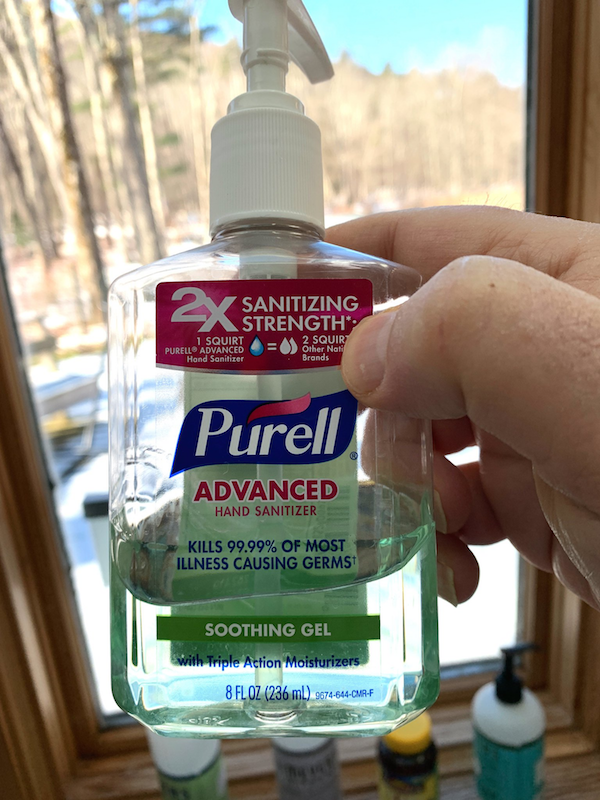
I found this in one of the closets in my house. The previous owners must've left it. Precious!
Google Could Have Fixed 2FA Code-Stealing Flaw in Authenticator App Years Ago Slashdotby msmash on google at January 1, 1970, 1:00 am (cached at March 7, 2020, 1:34 pm)

An anonymous reader shares a report: Last month, a cybersecurity firm discovered the first-ever Android malware that came with the capability to steal the 2FA (two-factor authentication) codes generated by the Google Authenticator app. The malware, discovered by researchers from ThreatFabric, was named Cerberus, and its 2FA OTP code-stealing feature was still under development, yet to have been detected in a real-world attack. According to researchers, the malware was a hybrid between a banking trojan and a remote access trojan (RAT). Once an Android user got infected, the hacker would use the malware's banking trojan features to steal credentials for mobile banking apps. If an account was protected by 2FA, and namely by the Google Authenticator app, the malware was designed to allow the Cerberus gang to connect to a user's device manually, via its RAT features. Hackers would then open the Authenticator app, generate one-time passcodes, take a screenshot of the codes, and then access the user's account. [...] Nightwatch researchers said that Google could have fixed this issue as early as October 2014, when this misconfiguration was first brought to its attention by someone on GitHub.

Read more of this story at Slashdot.

Telecom Italia Fined $131 Million for Broadband Market Abuse Slashdotby msmash on business at January 1, 1970, 1:00 am (cached at March 7, 2020, 10:34 am)

Italy's competition watchdog said on Friday it had fined former phone monopoly Telecom Italia (TIM) 116 million euros ($131 million) for abusing its dominant position in the broadband market in an attempt to obstruct the entrance of rivals. From a report: The Italian antitrust authority said in a statement that Telecom Italia had conducted a "premeditated anti-competition strategy" aimed at hindering its competitors' investments in ultra-fast broadband. The authority opened its investigation into TIM's superfast broadband rollout and wholesale pricing plans three years ago after TIM, then headed by Chief Executive Flavio Cattaneo, announced a plan, dubbed Cassiopea, to roll out fast broadband in so-called uneconomic areas. TIM had initially said it would not roll out broadband in areas where it could not guarantee a return on its investment, forcing Rome to step in with state subsidized tenders.

Read more of this story at Slashdot.

Comic for March 06, 2020 Dilbert Daily Strip(cached at March 7, 2020, 8:01 am)

Dilbert readers - Please visit Dilbert.com to read this feature. Due to changes with our feeds, we are now making this RSS feed a link to Dilbert.com.
Uber and Lyft Drivers Weigh Risk of Safety Against Paycheck Slashdotby msmash on transportation at January 1, 1970, 1:00 am (cached at March 7, 2020, 7:34 am)

Many Lyft and Uber drivers have seen a bump in business from the spreading coronavirus, but they're also weighing the risks of staying safe versus continuing to earn a paycheck. From a report: A study published Friday shows that more than half of ride-hailing drivers said they were now "very concerned" about reduced earnings as a result of the virus and 41% said they've modified their driving strategy as a result. These changes include reducing hours, refusing airport rides and halting driving entirely. The survey of 871 drivers in the U.S. from March 1 to March 4 compared data with similar four-day periods in 2020 and was conducted by driver productivity app Gridwise. "They are doing what they have to do to continue earning," said Brandon Sellers, a product growth specialist at the Pittsburgh-based startup. About one-third of drivers are now wiping down their cars with disinfectant after every ride, using hand sanitizer and wearing a mask, he said. "The data is telling us that drivers are afraid."

Read more of this story at Slashdot.