Coronavirus Has Temporarily Reduced China's CO2 Emissions By a Quarter Slashdotby msmash on china at January 1, 1970, 1:00 am (cached at February 20, 2020, 11:35 pm)

As China battles one of the most serious virus epidemics of the century, the impacts on the country's energy demand and emissions are only beginning to be felt. From a report: Electricity demand and industrial output remain far below their usual levels across a range of indicators, many of which are at their lowest two-week average in several years. These include: Coal use at power stations reporting daily data at a four-year low. Oil refinery operating rates in Shandong province at the lowest level since 2015. Output of key steel product lines at the lowest level for five years. Levels of NO2 air pollution over China down 36% on the same period last year. Domestic flights are down up to 70% compared to last month. All told, the measures to contain coronavirus have resulted in reductions of 15% to 40% in output across key industrial sectors. This is likely to have wiped out a quarter or more of the country's CO2 emissions over the past two weeks, the period when activity would normally have resumed after the Chinese new-year holiday. Over the same period in 2019, China released around 400m tonnes of CO2 (MtCO2), meaning the virus could have cut global emissions by 100MtCO2 to date. The key question is whether the impacts are sustained, or if they will be offset -- or even reversed -- by the government response to the crisis.

Read more of this story at Slashdot.
[no title] Scripting News(cached at February 20, 2020, 11:33 pm)

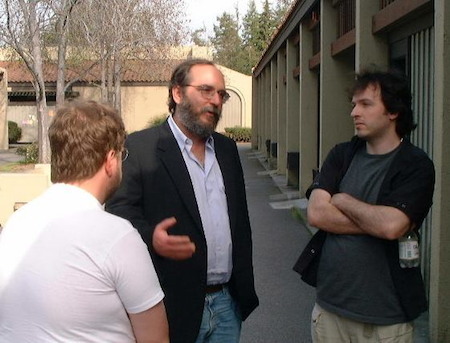
Manilapalooza, 3/25/2000.
Microsoft To Bring Its Defender Antivirus Software To iOS and Android Slashdotby msmash on security at January 1, 1970, 1:00 am (cached at February 20, 2020, 10:35 pm)

Microsoft said today it plans to bring its antivirus software, Defender Advanced Threat Protection, to phones and other devices running Apple's iOS and Google's Android. From a report: The software, also called Defender ATP, is already available on Windows and MacOS. It offers features like preventive protection, post-breach detection and automated investigation and response, according to Microsoft. When it comes to mobile devices, Microsoft's Rob Lefferts said that the Defender software could help companies protect employees from things like malware and phishing attacks. Apple's and Google's app stores are "pretty safe," Lefferts said, but "malware does happen on those platforms."

Read more of this story at Slashdot.

Google AI No Longer Uses Gender Binary Tags on Images of People Slashdotby msmash on google at January 1, 1970, 1:00 am (cached at February 20, 2020, 10:05 pm)

Google's image-labeling AI tool will no longer label pictures with gender tags like "man" and "woman." From a report: In the email, Google cites its ethical rules on AI as the basis for the change. This is a progressive move by Google -- and one that will hopefully set a precedent for the rest of the AI industry. Ethics aside, Google also says it's made this change because it isn't possible to infer gender from someone's appearance. Google is correct on that count. AI's tendency toward a gender binary might be helpful in blunt categorization, but there are also many gender identities that fall on the spectrum outside of "man" and "woman." Though Google doesn't go as far as saying so in its policies, removing the gender binary from its AI actively makes the software more inclusive of transgender and non-binary people. It's a move that the rest of the tech industry would do well to emulate.

Read more of this story at Slashdot.

Trump Backs Supporter Larry Ellison in Court Fight With Google Slashdotby msmash on google at January 1, 1970, 1:00 am (cached at February 20, 2020, 9:05 pm)

kimanaw shares a report: The Trump administration urged the U.S. Supreme Court to reject an appeal by Alphabet's Google, boosting Oracle's bid to collect more than $8 billion in royalties for Google's use of copyrighted programming code in the Android operating system. The administration weighed in on the high-stakes case on the same day that President Donald Trump attended a re-election campaign fundraiser in California hosted by Oracle's co-founder, billionaire Larry Ellison. Ellison hosted a golf outing and photos with Trump. The event cost a minimum of $100,000 per couple to attend, with a higher ticket price of $250,000 for those who wanted to participate in a policy roundtable with the president, the Palm Springs Desert Sun reported. Google is challenging an appeals court ruling that it violated Oracle copyrights when it included some Oracle-owned Java programming code in Android. The dispute has split Silicon Valley, pitting developers of software code against companies that use the code to create programs. Google's "verbatim copying" of Oracle's code into a competing product wasn't necessary to foster innovation, the U.S. Solicitor General Noel Francisco said Wednesday in a filing with the court.

Read more of this story at Slashdot.

Twitter is Testing New Ways To Fight Misinformation Slashdotby msmash on social at January 1, 1970, 1:00 am (cached at February 20, 2020, 8:35 pm)

Twitter is experimenting with adding brightly colored labels directly beneath lies and misinformation posted by politicians and public figures, according to a leaked demo of new features sent to NBC News. From the report: Twitter confirmed that the leaked demo, which was accessible on a publicly available site, is one possible iteration of a new policy to target misinformation it plans to roll out March 5. In this version, disinformation or misleading information posted by public figures will be corrected directly beneath the tweet by fact-checkers and journalists who are verified on the platform, and possibly other users who will participate in a new "community reports" feature, which the demo claims is "like Wikipedia." "We're exploring a number of ways to address misinformation and provide more context for tweets on Twitter," a Twitter spokesperson said. "Misinformation is a critical issue and we will be testing many different ways to address it." The demo features bright red and orange badges for tweets that have been deemed "harmfully misleading," in nearly the same size as the tweet itself and prominently displayed directly below the tweet that contains the harmful misinformation.

Read more of this story at Slashdot.

UCLA Abandons Plans To Use Facial Recognition After Backlash Slashdotby msmash on education at January 1, 1970, 1:00 am (cached at February 20, 2020, 8:05 pm)

Ahead of a national day of action led by digital rights group Fight for the Future, UCLA has abandoned its plans to become the first university in the United States to adopt facial recognition technology. From a report: In a statement shared with Fight for the Future's Deputy Director Evan Greer, UCLAâ(TM)s Administrative Vice Chancellor Michael Beck said the university "determined that the potential benefits are limited and are vastly outweighed by the concerns of the campus community." Since last year, UCLA has been considering using the university's security cameras to implement a facial recognition surveillance system. These plans have been dogged by student criticism, culminating in an editorial in the Daily Bruin, UCLA's student newspaper, that argued the system would "present a major breach of students' privacy" while creating "a more hostile campus environment" by "collecting invasive amounts of data on [UCLA's] population of over 45,000 students and 50,000 employees." In an attempt to highlight the risks of using facial recognition on UCLA's campus, Fight for the Future used Amazon's facial recognition software, Rekognition, to scan public photos of UCLA's athletes and faculty, then compare the photos to a mugshot database. Over 400 photos were scanned, 58 of which were false positives for mugshot images -- the software often gave back matches with "100% confidence" for individuals "who had almost nothing in common beyond their race"

Read more of this story at Slashdot.

JPEG Committee is Banking on AI To Build Its Next Image Codec Slashdotby msmash on ai at January 1, 1970, 1:00 am (cached at February 20, 2020, 7:35 pm)

Joint Photographic Experts Group (JPEG), a committee that maintains various JPEG image-related standards, has started exploring a way to involve AI to build a new compression standard. From a report: In a recent meeting held in Sydney, the group released a call for evidence to explore AI-based methods to find a new image compression codec. The program, aptly named JPEG AI, was launched last year; with a special group to study neural-network-based image codecs. Under the program, it aims to find possible solutions towards finding a new standard. To do that, it has partnered with IEEE (Institute of Electrical and Electronics Engineers) to call for papers under the Learning-based Image Coding Challenge. These papers will be presented at the International Conference of Image Processing (ICIP) scheduled to be held at Abu Dhabi in October.

Read more of this story at Slashdot.

[no title] Scripting News(cached at February 20, 2020, 7:33 pm)

A new version of LO2, v1.8.8. This is the first one that can publish twitter threads. Also fixes to keystrokes. Here are the change notes.
[no title] Scripting News(cached at February 20, 2020, 7:33 pm)

A short podcast explaining the new version of LO2.
Sweden Starts Testing World's First Central Bank Digital Currency Slashdotby msmash on business at January 1, 1970, 1:00 am (cached at February 20, 2020, 6:35 pm)

Sweden's Riksbank said on Wednesday it had begun testing an e-krona, taking the country a step closer to the creation of the world's first central bank digital currency (CBDC). From a report: If the e-krona eventually comes into circulation it will be used to simulate everyday banking activities, such as payments, deposits and withdrawals from a digital wallet such as a mobile phone app, the Riksbank said. "The aim of the project is to show how an e-krona could be used by the general public," the Riksbank said in a statement. In January, the central banks of Britain, the euro zone, Japan, Sweden and Switzerland joined forces to assess the case for issuing CBDCs. CBDCs are traditional money, but in digital form, issued and governed by a country's central bank. By contrast, cryptocurrencies such as bitcoin are produced by solving complex maths puzzles, and governed by disparate online communities instead of a centralized body. The sharp decline in the use of cash and competition from alternative currencies, such as Facebook's Libra, has also prompted central banks around the world to consider issuing their own electronic currencies.

Read more of this story at Slashdot.

Microsoft To Invest $1.1 Billion in Mexico Over Next 5 Years Slashdotby msmash on microsoft at January 1, 1970, 1:00 am (cached at February 20, 2020, 6:05 pm)

Microsoft chief executive Satya Nadella said the technology giant will invest $1.1 billion in Mexico over the next five years, according to a promotional video released by the Mexican government on Thursday. From a report: Nadella said the investment is "focused on expanding access to digital technology for people and organizations across the country." Microsoft will build a new data center to deliver "client services to help every organization to really get an advantage and drive digital transformation," added Nadella, who met with Mexican President Andres Manuel Lopez Obrador last year. The U.S. company will also invest in training labs and skills programs, Nadella said.

Read more of this story at Slashdot.

[no title] Scripting News(cached at February 20, 2020, 6:03 pm)

After all the dust settles, the question Bloomberg asked about starting businesses, that's micro-targeted at me. Yes, I have started businesses. And I've built networks of software with millions of nodes.
[no title] Scripting News(cached at February 20, 2020, 6:03 pm)

We need to view the government as a system, and unsentimentally fix the broken stuff, while preserving and enhancing the best core ideas that define America.
US, UK Formally Blame Russia for Mass-Defacement of Georgian Websites Slashdotby msmash on uk at January 1, 1970, 1:00 am (cached at February 20, 2020, 5:35 pm)

The US and UK governments have issued official statements today formally accusing Russia's military intelligence agency, GRU, with carrying out a coordinated cyber-attack on thousands of Georgian websites in October 2019. From a report: The incident, widely reported at the time, was considered the largest cyber-attack in the former Soviet country's history. According to a report at the time, unidentified hackers broke into at least one web hosting provider and defaced more than 15,000 websites with an image of former Georgian President Mikheil Saakashvili, with the text "I'll be back" overlaid on top. The former Georgia President was known for his fierce pro-Western agenda but is now a Ukrainian citizen after leaving Georgia in 2013, citing a political witch-hunt on corruption charges. The messages were reported as appearing on sites for the Georgian government, courts, NGOs, news media, and local businesses. In some cases, the web host disruption also took down broadcasting services for some radio and TV stations.

Read more of this story at Slashdot.